An Interview with Sara Huff: How One of Brazil’s Leading Feminist Activists Became a Voice for Life
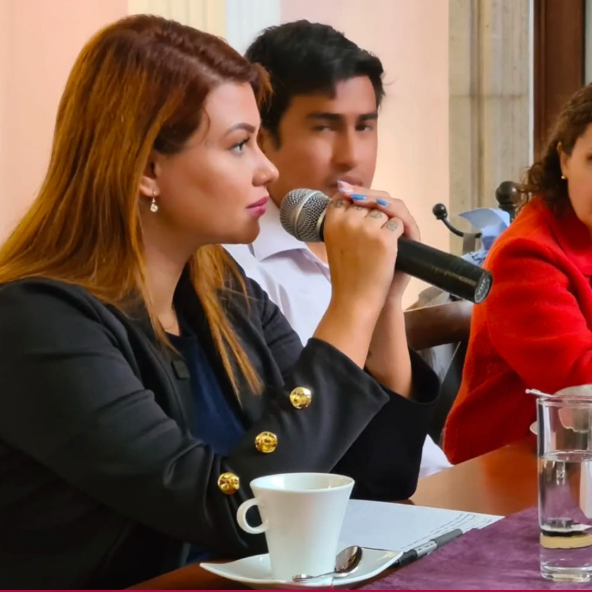
Sara Huff ( formerly Sara Winter) is one of the most prominent figures in contemporary pro-life activism in Latin America, known for transforming her personal story into a public testimony about abortion, motherhood, and faith. A former feminist activist who later became one of Brazil’s most recognizable conservative voices, Winter has spoken extensively about how her experience with chemical abortion changed the course of her life and led her toward pro-life advocacy.
Now married and living in the United States, she continues her activism through public speaking, media appearances, and engagement with pro-life organizations, while bringing a distinctly Latin American style of activism into American conservative circles. I had the opportunity to speak with her about her convictions and the future of the pro-life movement, which she explores through the following questions.
From your experience, what does “defending life” mean, and what has it concretely involved in your case?
To me, defending life means recognizing that human life has value from the very beginning, even when society tries to deny it. It means defending both the child and the mother, especially in a culture that often treats abortion as something normal, simple, or even empowering. This became very personal after my experience with chemical abortion. I suffered serious physical and emotional consequences, and it forced me to confront the reality of what abortion really is. That experience changed me deeply and pushed me to start speaking publicly about it.
Since then, defending life has meant using my voice to warn women about the dangers of abortion pills, sharing my testimony honestly, speaking at events, and advocating for a culture that values children, motherhood, and family. To me, this is not just a political issue. It is something profoundly human and moral.
Why is pro-life activism important?
Because human rights mean nothing if the most basic right, the right to live, is not protected.
Also, because many women are not being told the complete truth. They are often promised freedom, empowerment, or relief through abortion, but the emotional and physical consequences are frequently ignored or minimized.
The pro-life movement exists to remind society that unborn children are human beings and that women deserve support, truth, and compassion, not an industry that profits from their pain and vulnerability. Culturally, I think pro-life activism is also important because abortion did not appear in isolation. It became normalized through broader cultural ideas that disconnected sexuality from responsibility, family, and motherhood. If we want to defend life, we also have to defend the values that sustain life.
What are the different ways to get involved in it?
There are many ways to help, and not everyone has to do the same thing.
Some people volunteer directly with women in crisis pregnancies. Others help through education, politics, media, counseling, journalism, or public speaking. Some people donate to pregnancy resource centers or organizations helping mothers and children.
I also think personal testimony is powerful. In today’s world, social media allows ordinary people to influence culture in ways that were impossible before. Sharing experiences, scientific information, or simply speaking openly about the humanity of unborn children can make a real difference. Sometimes involvement can be as simple as helping a mother in need, encouraging adoption, mentoring young women, or refusing to stay silent when human life is being treated as disposable.
What should change within the pro-life movement to make it more effective?
I believe the pro-life movement needs to stop trying to reconcile itself with feminism.
In my opinion, abortion is not an accidental excess of feminism. It is one of its logical consequences. Feminism helped create the cultural mentality that separates sex from responsibility, treats motherhood as a burden, and views children as obstacles to personal freedom.
Because of that, I think the pro-life movement weakens itself when it tries to adopt feminist language or constantly search for a “good” version of feminism. I also believe it is a mistake when pro-life organizations use feminist figures as symbols or references while simultaneously trying to fight abortion. The movement should be more confident in defending motherhood, marriage, femininity, and family without apologizing for it. Women do not need abortion to have dignity, and motherhood is not oppression.