Source: AP
As the year comes to a close, it is worth recognizing the positive events that marked 2025. Many of these relate to the defense of traditional values, human rights understood through the dignity of the person, and the building of societies oriented toward the flourishing of every individual. Here are some of the most noteworthy:
1. Conservative electoral victories worldwide
2025 brought very favorable election results for conservatives in different regions. In June, Poland elected Karol Nawrocki as president, with a message focused on national identity, family, and border security.
In October, Bolivians ended 20 years of socialist governments by electing Rodrigo Paz as president. This country, which had remained a closed country with a heavily state‑controlled economy, now begins a turn toward openness. Paz promised to revitalize the economy through pro‑market reforms, open the airspace to international investment, improve foreign relations, and combat corruption that characterized the previous socialist administrations.

Rodrigo Paz Pereira es el actual Presidente Constitucional de Bolivia, habiendo asumido el cargo el 8 de noviembre de 2025 tras ganar las elecciones generales.
In Honduras, Nasry “Tito” Asfura, publicly supported by Donald Trump, is leading the vote count. He plans to promote sustainable urban development, security, and private investment.
As well, José Antonio Kast won the Chilean elections with more than 58% of the votes, and he’s set to become the next President of Chile. Kast, a practicing Catholic and father of eight, has spent years traveling the country, building a strong party structure, and presenting clear proposals on family, education, security, and economic freedom.
2. United States becomes pro‑life
The United States has shifted from being one of the main promoters of anti‑natalist policies to a government clearly pro‑life, both domestically and internationally. For instance, Trump’s Administration suspended funding to the United Nations Population Fund (UNFPA), a major agency linked to global population control and abortion programs.
In addition, the government issued a directive instructing U.S. embassies and diplomatic missions to treat abortion as a violation of human rights in their annual reports. The country also reaffirmed support for the Geneva Consensus Declaration, which maintains that there is no human right to abortion and that each nation has sovereignty to protect life and strengthen the family.
Domestically, the “Enforcing the Hyde Amendment” executive order reinforced the prohibition on using federal funds for elective abortions, while the reinstated Mexico City Policy prevents the United States from funding foreign organizations that perform or promote abortions. Also, over 70 Planned Parenthood clinics closed nationwide, President Trump pardoned over twenty pro‑life activists, and became the first U.S. president to give remarks at the March for Life in Washington, D.C.
3. Defense of religious freedom
As a leader in defending individual liberties, the U.S. administration intensified efforts to protect religious freedom and freedom of expression, both domestically and internationally. Measures include strengthening the U.S. Commission on International Religious Freedom (USCIRF) and reactivating the White House Faith Office, ensuring the full exercise of these rights.
Moreover, Nigeria, long suffering brutal religious persecution, was designated as a Country of Particular Concern, enabling targeted diplomatic and policy measures to protect persecuted religious communities. Meanwhile, in the Vatican, the report on the persecution of Christians in Nicaragua documented the expulsion of religious orders, closure of Catholic institutions, and criminalization of the clergy, prompting action to defend the Church.
Positive news also came from Cuba, where 553 political prisoners were released “in the spirit of the 2025 Jubilee Year” following years of mediation with the Vatican, as well as from Egypt and Myanmar, where prisoners of conscience were freed.
4. Legal advances promoting traditional values
Several countries enacted laws reinforcing traditional values. In Slovakia, a constitutional amendment affirmed the binary definition of gender, limited adoption to heterosexual couples, and banned surrogacy. In Peru, a law restricted bathroom use according to biological sex. In Texas, the governor signed a law requiring the Ten Commandments to be displayed in public classrooms. In Argentina, reforms promoted free-market principles, reduced the size of the state, and deregulated the economy, producing structural impact.
5. Canonizations and renewed inspiration
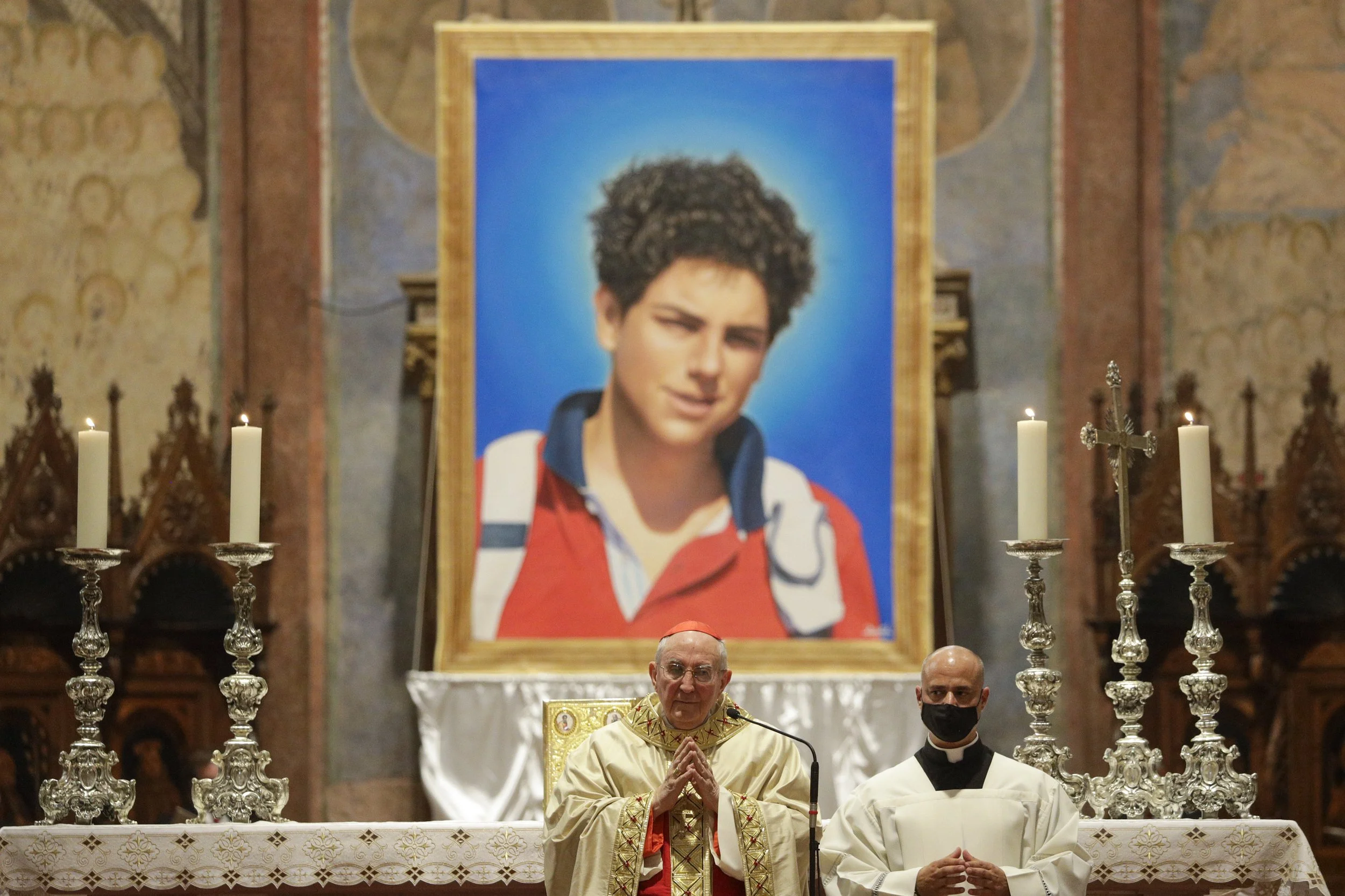
Finally, 2025 brought celebration of extraordinary lives of faith. Among the canonized were Carlo Acutis (1991–2006), patron of young Catholics and internet users, Pier Giorgio Frassati (1901–1925), “The Man of the Beatitudes,” and saints from Italy, Ecuador, Armenia, Papua New Guinea, and Venezuela, including martyrs and missionaries.
“The only thing we should ask God for in prayer is the desire to be holy.”
Under the newly elected Pope Leo XIV, the Church now has new models of holiness to inspire the faithful. The Pope, born in the United States but missionary in Peru and member of the Augustinian Order, has emphasized life, religious freedom, and the importance of the family, signaling a renewed focus on faith, tradition, and moral clarity.