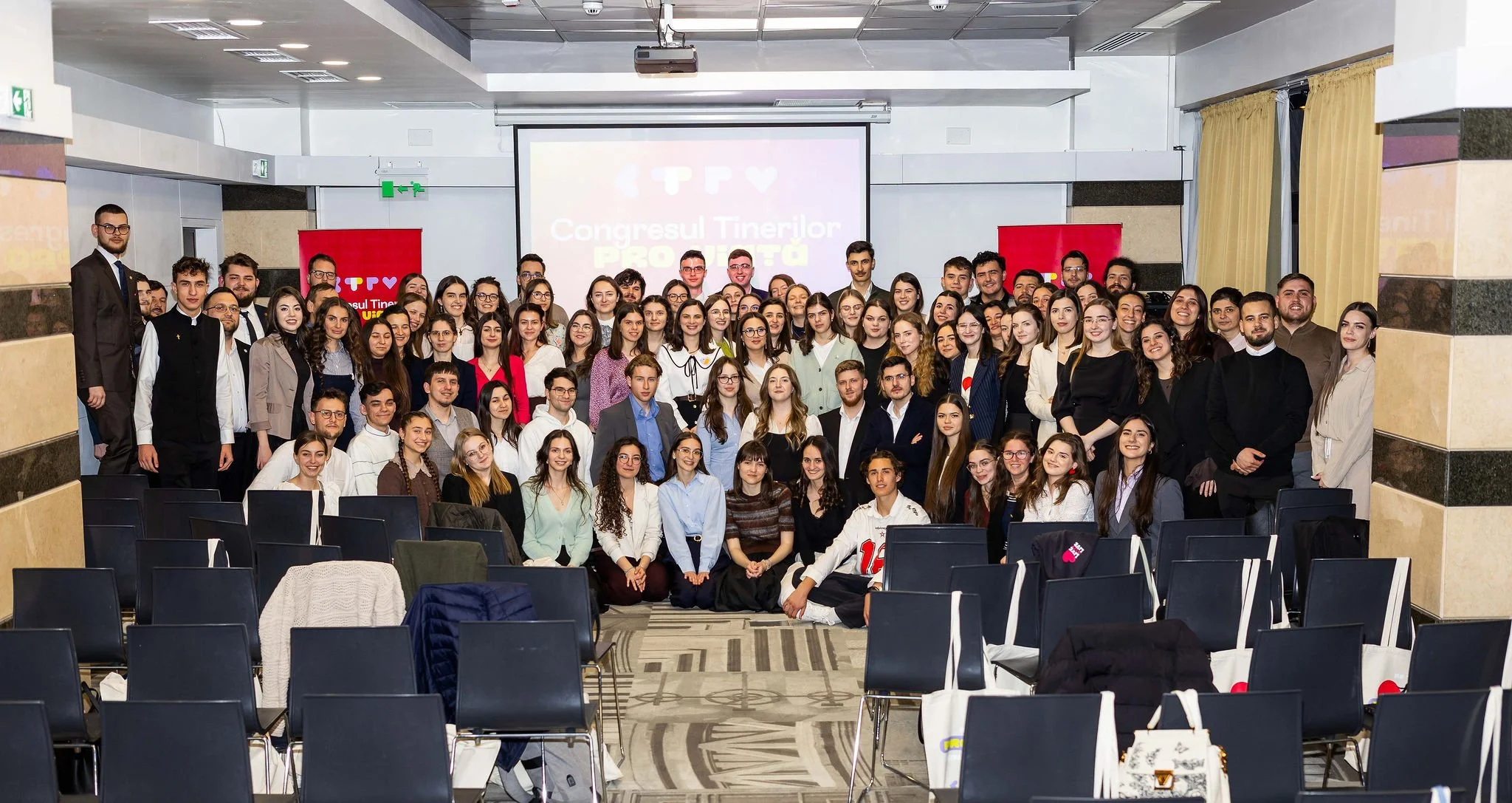
The Month for Life in Bucharest: Solidarity for Both - Part 1
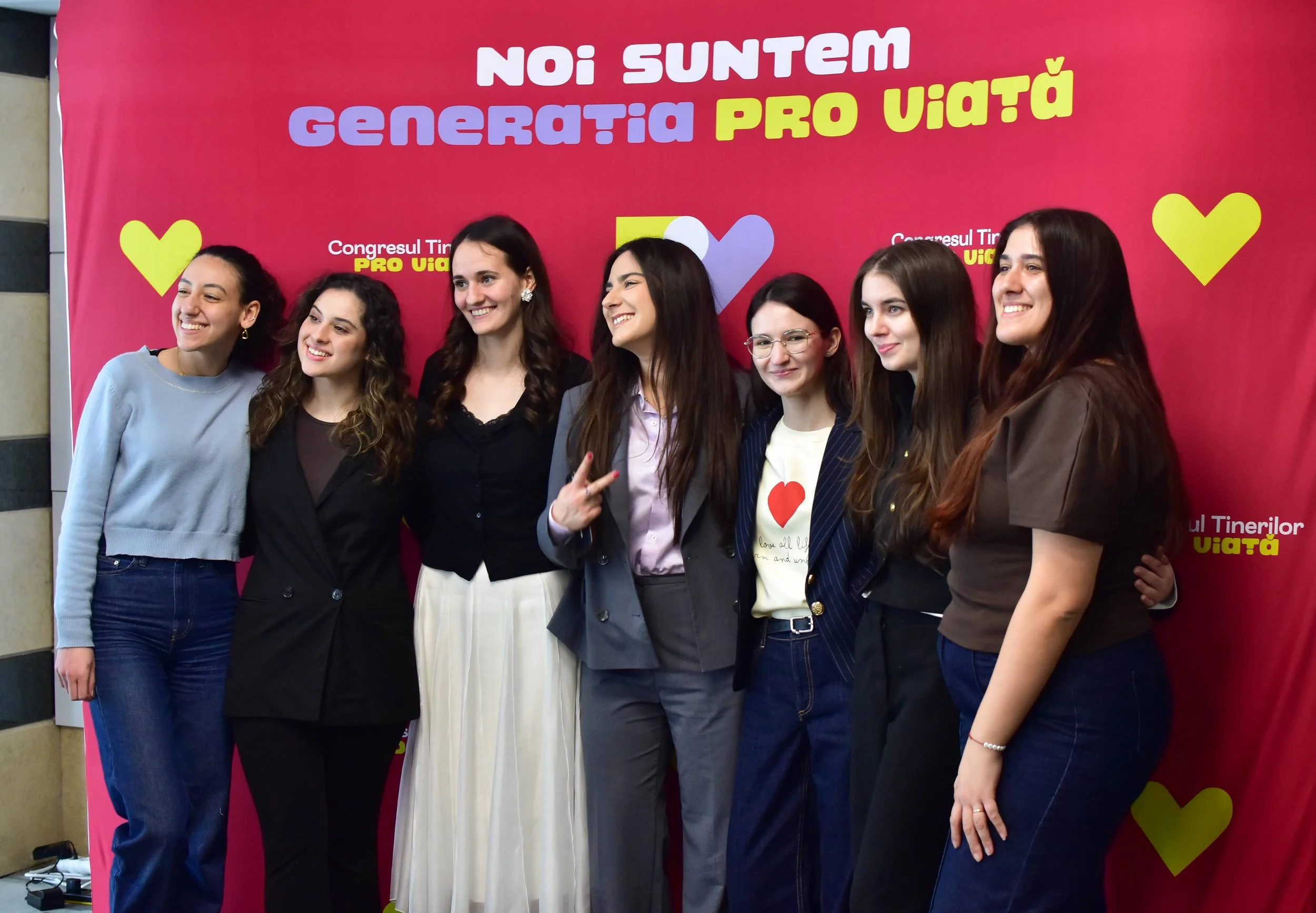
Photo Credits: Students for Life Bucharest
April 2nd
Romania sets aside an entire month to focus on the pro-life cause. Throughout the country, the Month for Life brings together hundreds of events that celebrate life and support mothers facing unplanned pregnancies. The month wraps up with March For Life events in cities across Romania. IYc joined the activities in Bucharest, where we were inspired to see so many young people working to build a culture that values life. This year’s theme? Solidarity for both!
Pro-Life Youth Congress
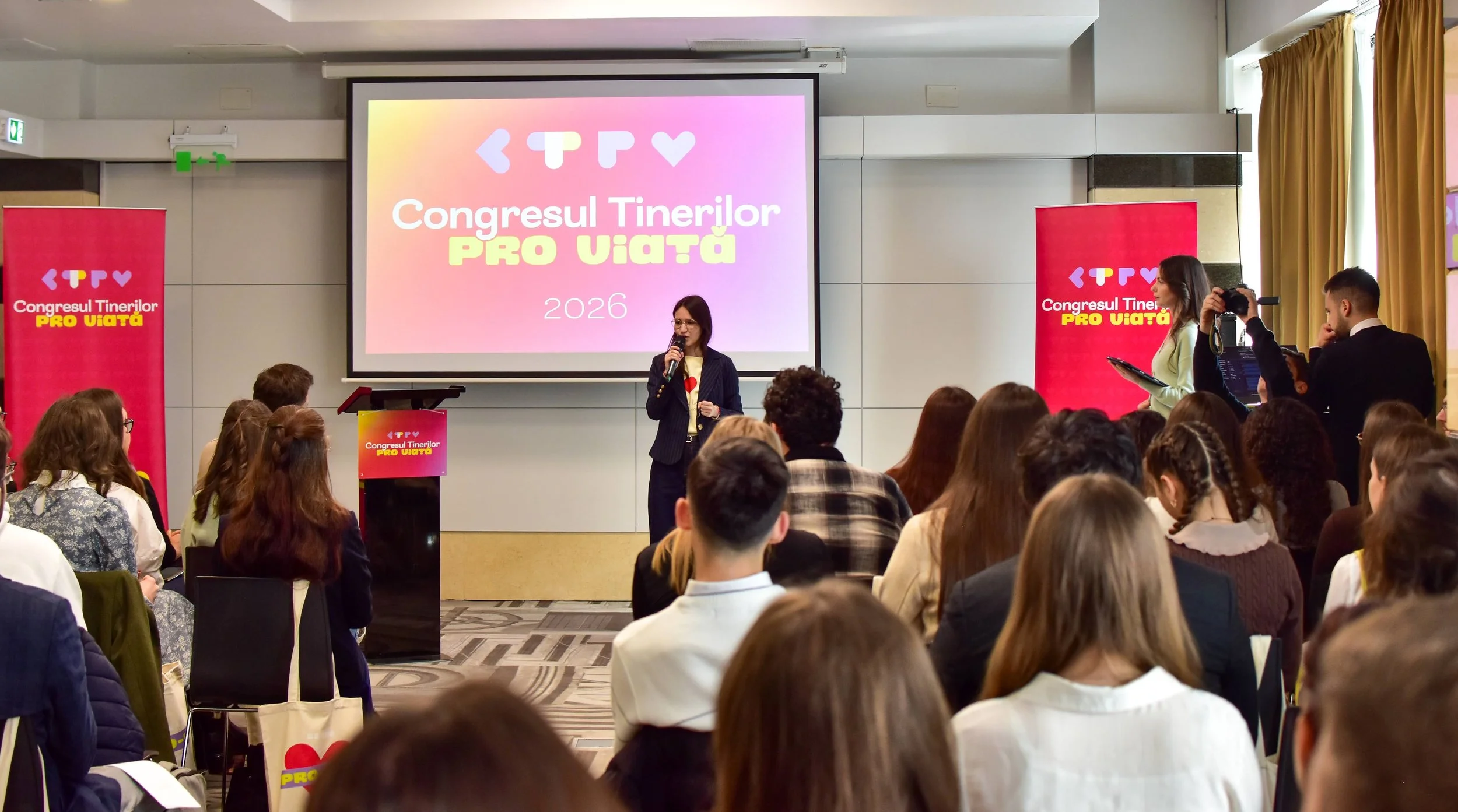
On March 21st, the Pro-Life Youth Congress brought together more than 90 participants! They listened to testimonies from Gen Z leaders and special guests and heard about the impact of pro-life advocacy in different communities.
The Congress was organized by Students for Life Bucharest and Iasi, as well as two other youth organizations, Asociația Tineretului Ortodox Român (ATOR) and Organizația Tinerilor București.
The conference room was full of energy, hope, joy, enthusiasm, and above all else, a drive to do good. At times, we were moved to tears; at others, to laughter… it quickly became obvious that these students are not mere colleagues working on a common project. They are true friends, a family of brothers and sisters in Christ, bound by a common love that lays the foundation for everything they do… and it spreads. It is contagious.
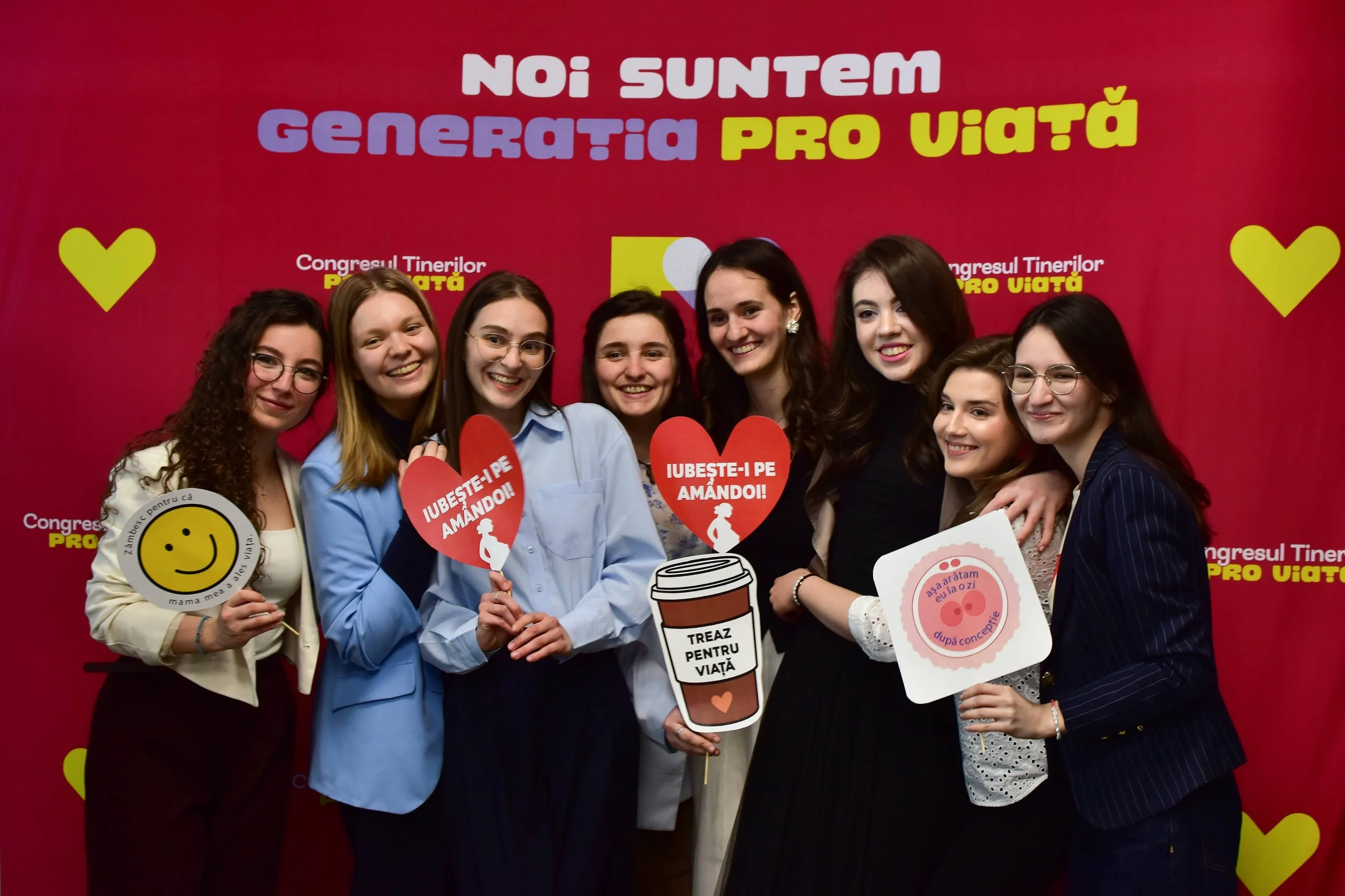
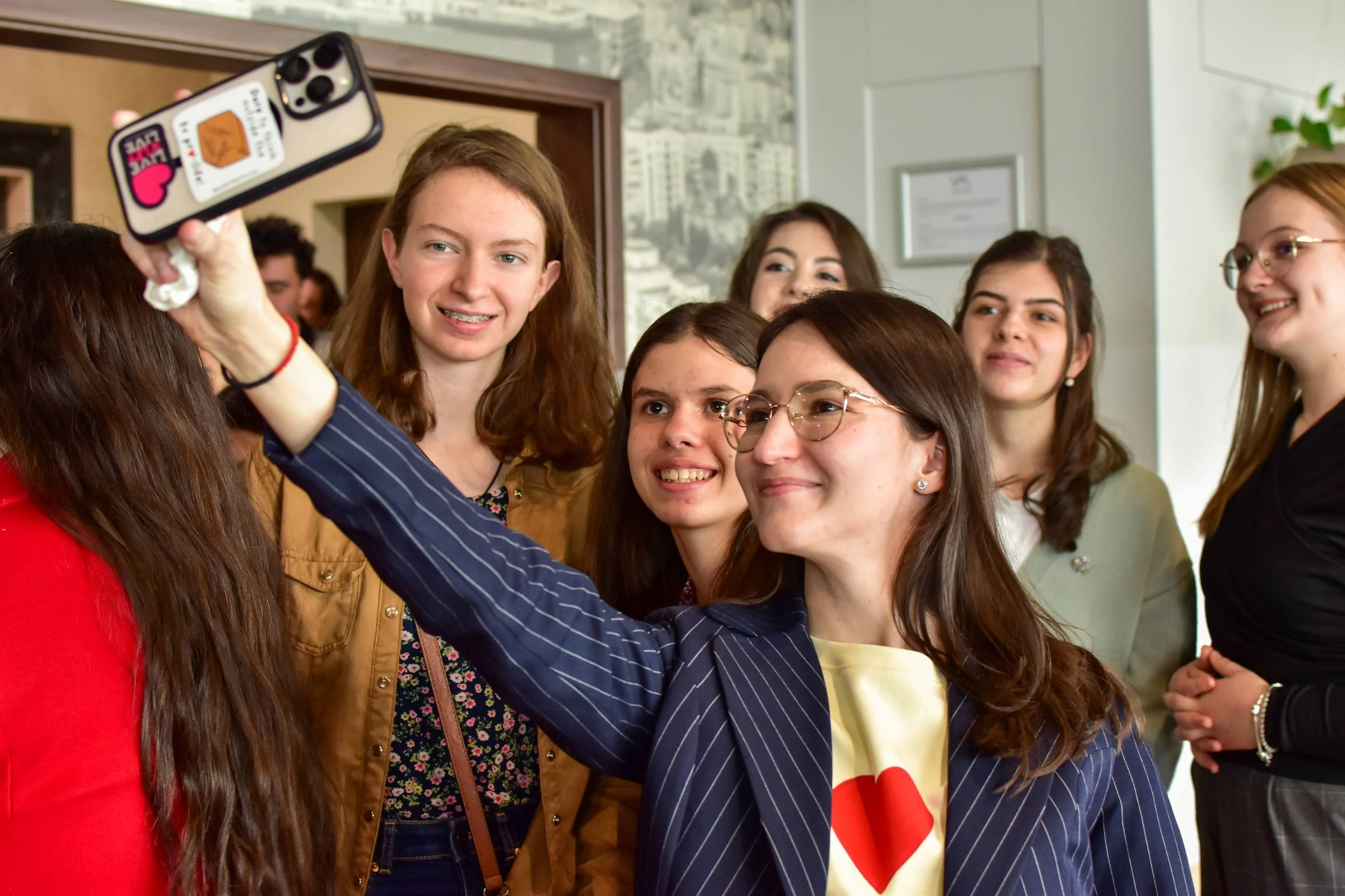
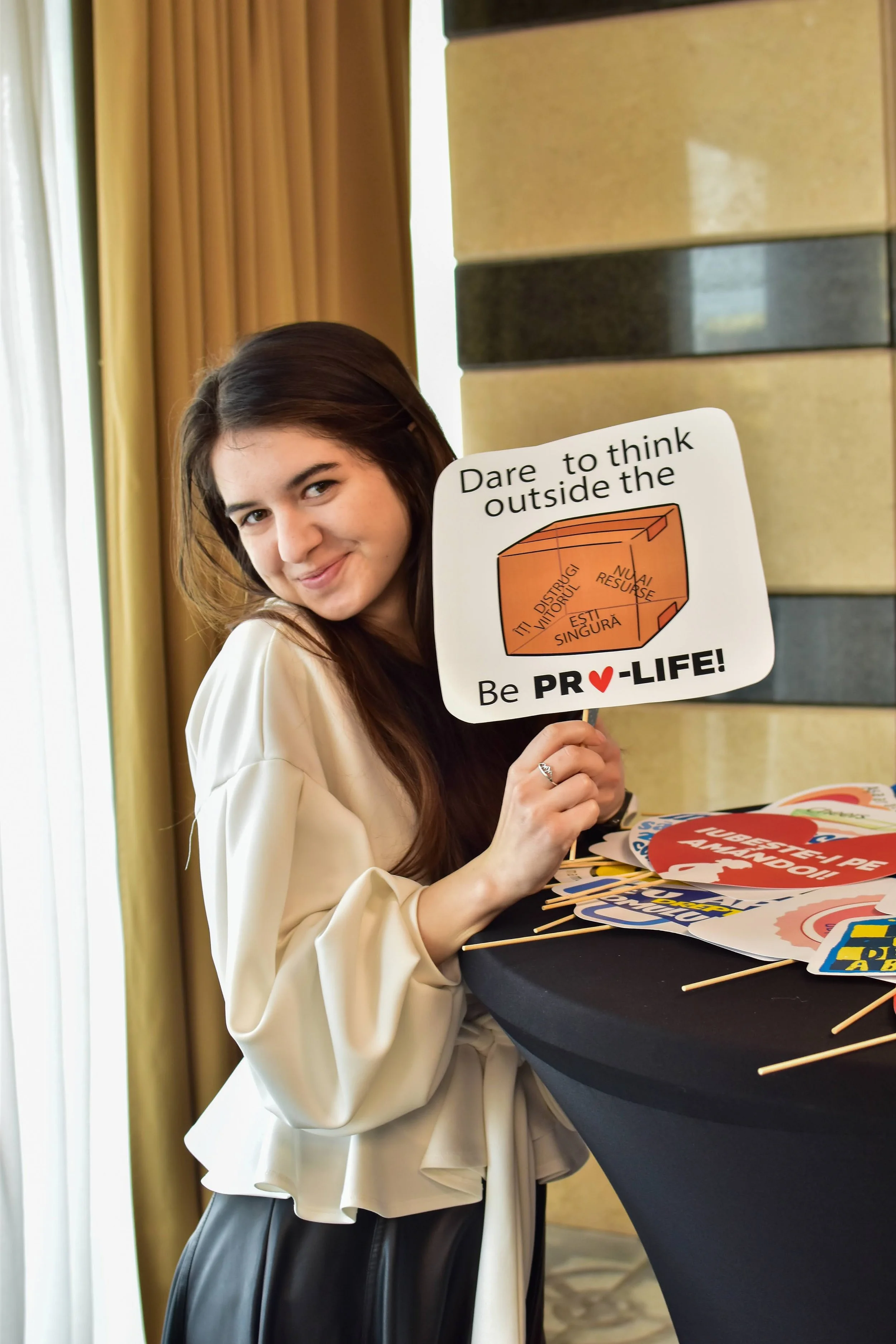
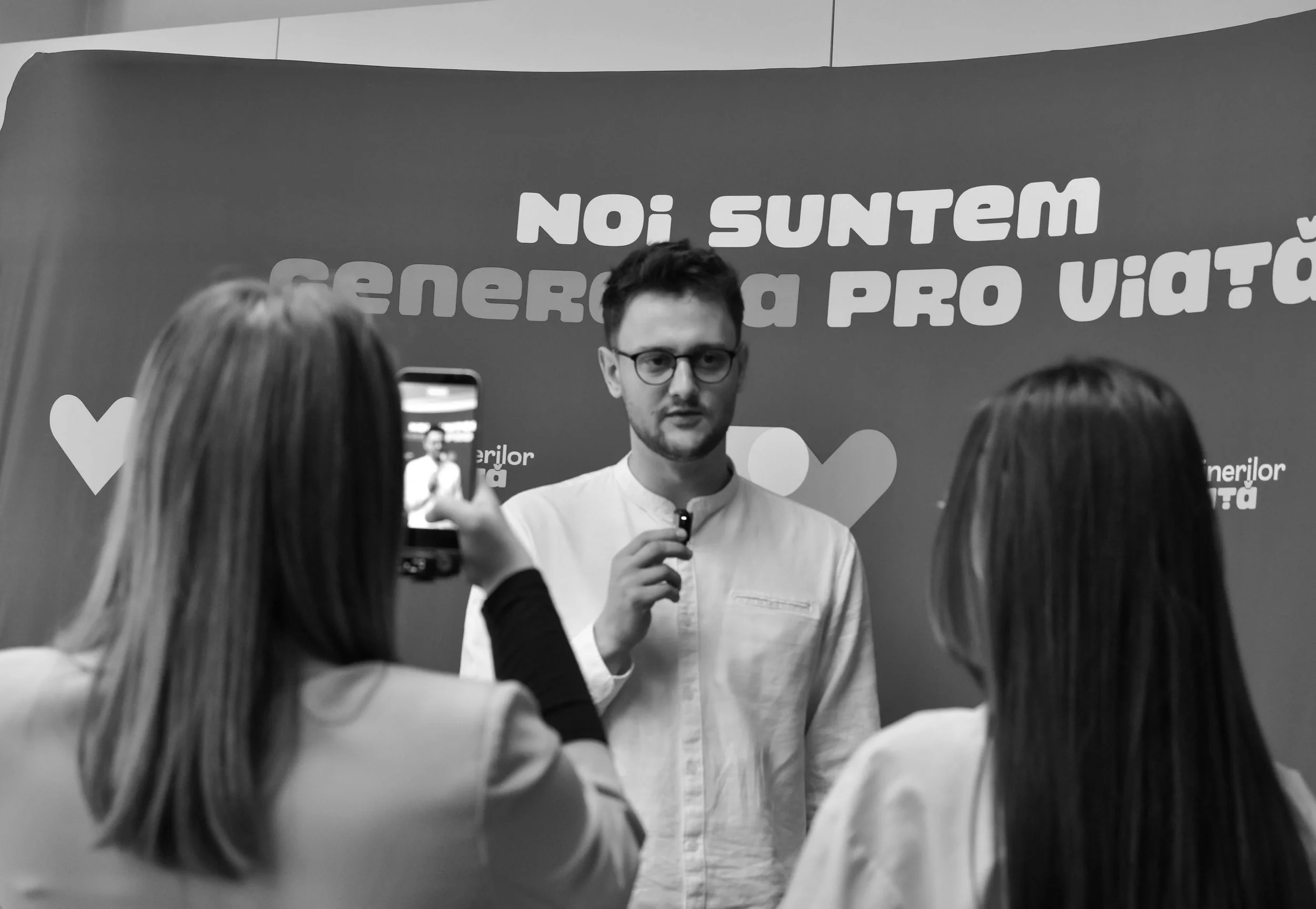
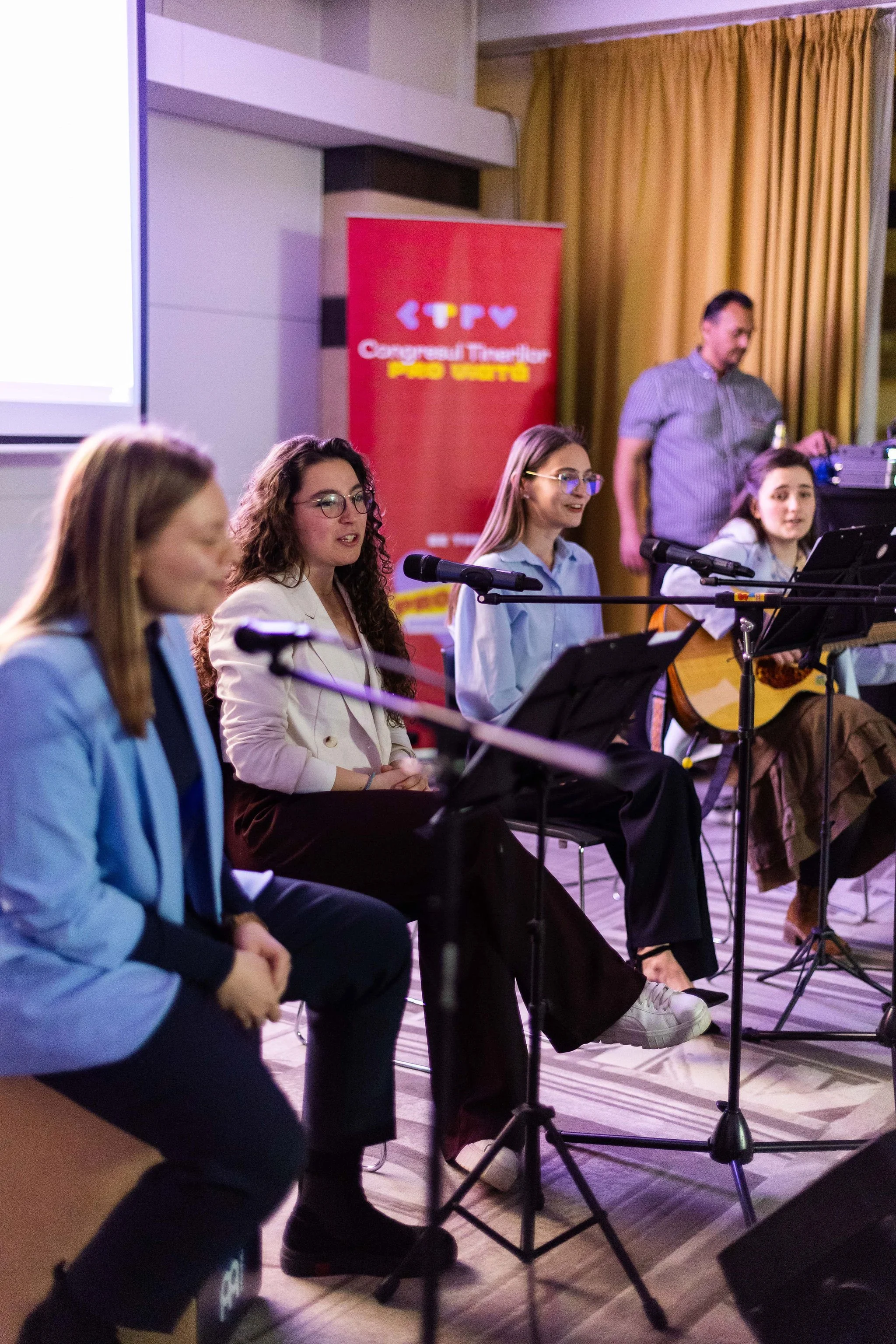
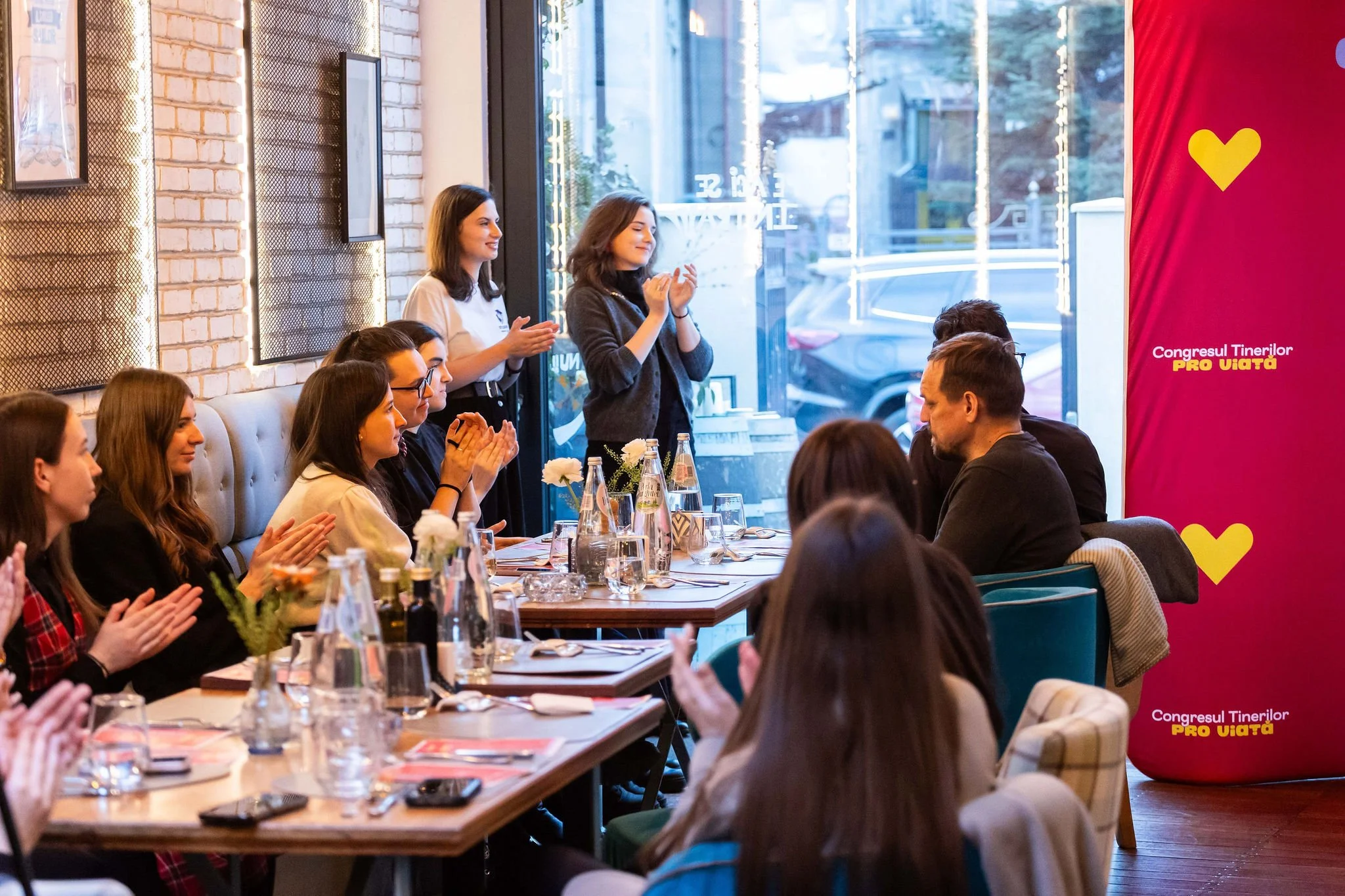
Many speakers touched on the importance of “being a light” to those around us. This meant proclaiming the truth about the invaluable worth of every single human life, and “loving our neighbor” as Christ commands us by showing up for mothers and families in need.
“We will speak about responsibility, how to deal with pressures to align ourselves with the pro-abortion narrative, and how we can be part of a change that goes beyond words and makes itself manifest in a concrete way in people’s lives.”
- Students for Life Bucharest
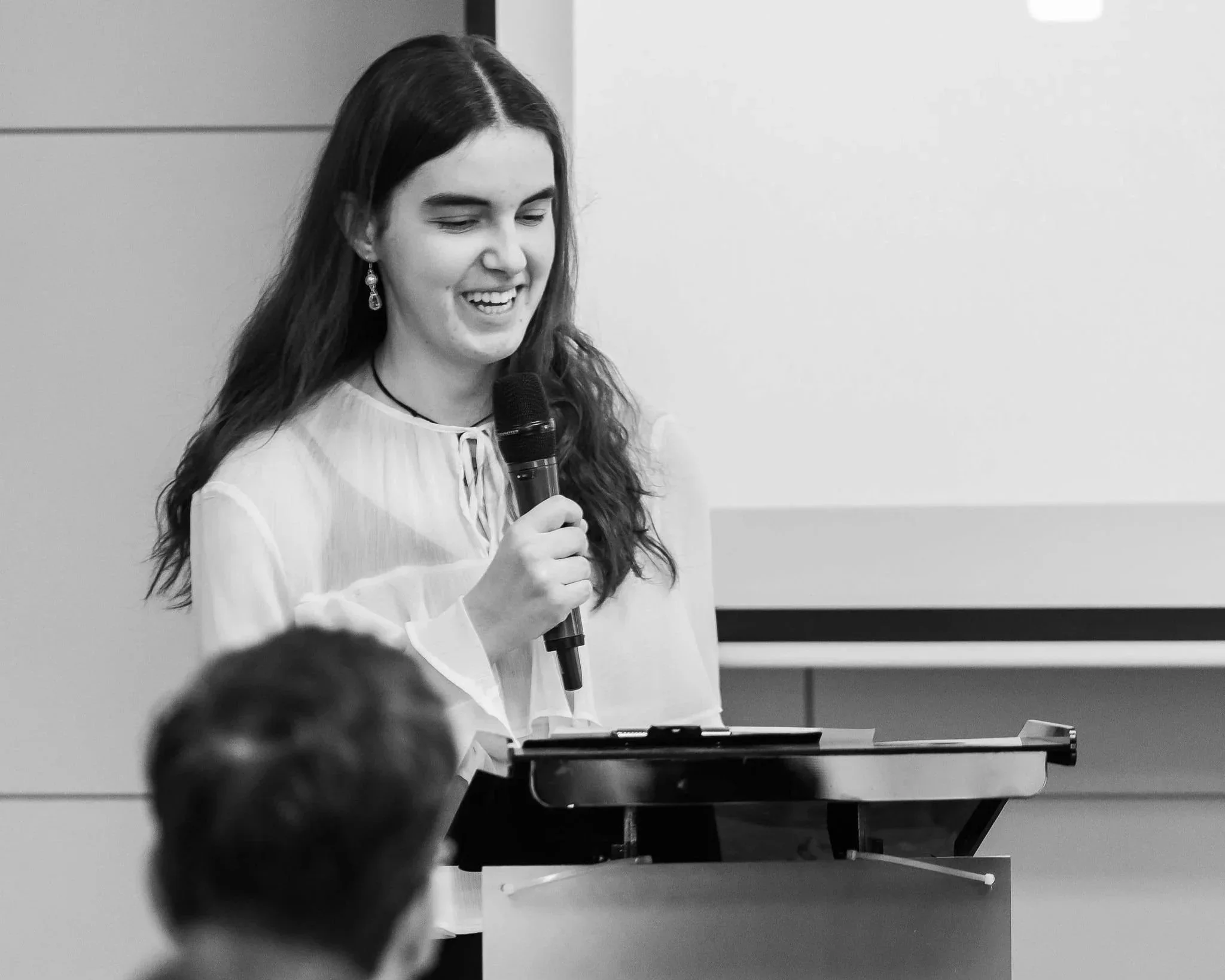
I arrived in Bucharest from New York just a few hours before the conference began. I hurried to the conference room and walked in during Ana Mera's speech from the League of Students of Timisoara. I am leaving some excerpts from her profound intervention below:
“I realized that the biggest wins, the biggest blessings come from the people around us. They are our joy, mirror, challenge, and motivation, and they present us with an opportunity for growth through each interaction. It is through people that I got the chance to learn the kind of strength we can access when living and acting together. We can be a light for each other [...] Solidarity means that together we are the light for those more vulnerable than us… for us to be the sun that takes away the fog from a mom’s forehead who just found out that there is a new life within her….and to show her the miracle she’s going through despite the great challenges ahead and to show her we are with her.”
“Together we can be the light for those around us who cannot imagine that there can be another solution other than running away, that the choice can be in continuing a life and to affirm its value, not to get rid of it. […] The strongest choice and most dignified choice is to give life a chance.”
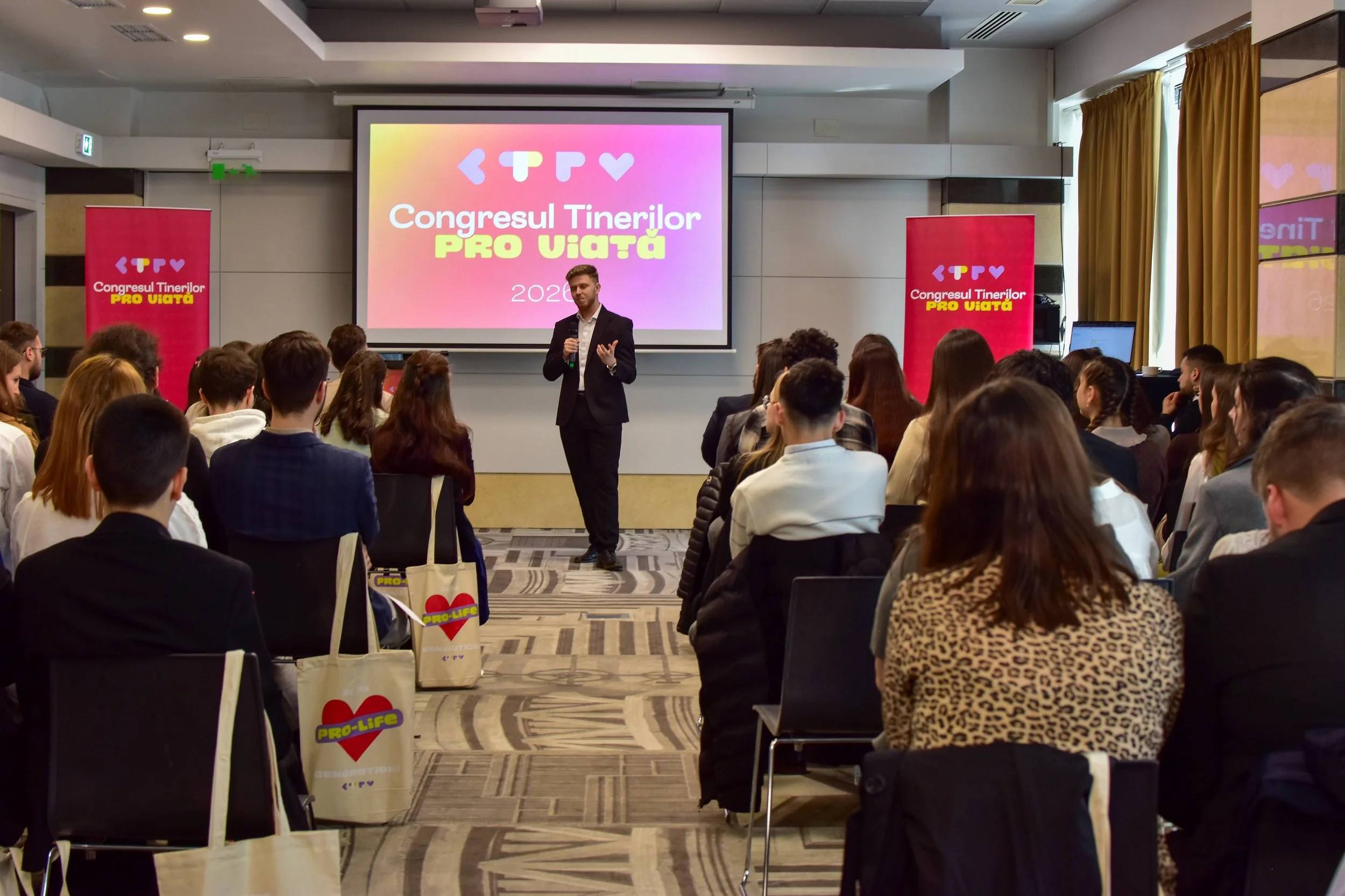
Andrei Rotaru from Emanoil encouraged men to “be the rock, the strength in the family,” but also explained that starting a family at a young age can be difficult and requires support.
Andrei told the story of his friend, Roberto, who, together with his wife, started a family while still students. Andrei and his community welcomed Roberto’s newborn daughter into their lives, which he saw as a natural response, not necessarily “pro-life.”
“We all inherited a niece,” Andrei continued and shared that members of their community took turns caring for the baby while Roberto and his wife were taking classes.
Andrei ended his talk by saying that for him, “Roberto is the example of a strong man, a courageous man, a truly pro-life man. He took life into his hands from a young age, he was a man, he is a man, and he is a father,” thus living out the message “from life to life!”
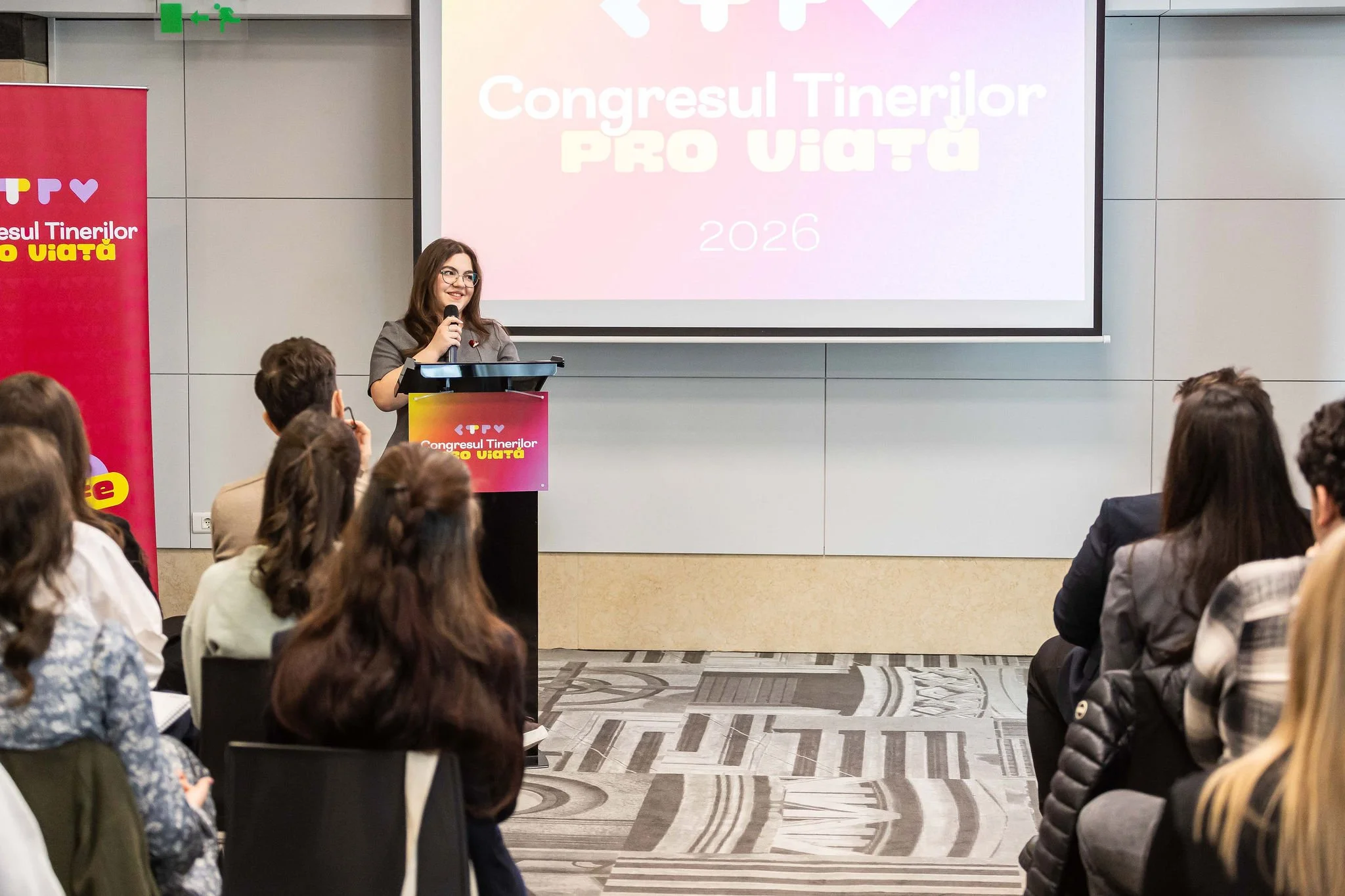
Paula Pintea’s message began with a question, “How much does it matter for each of us not to be alone?”
Paula is involved with ATOR Iasi, a group that travels to Moldova’s villages and organizes three-day camps for children living in poverty. The camps feature both leisure and learning activities and games, but Paula noticed a striking fact: the kids would often linger long after the activities ended, not wanting to leave. They would ask the organizers, “Will you come back tomorrow?” and Paula and her team would answer, “yes but only for two more days.” It became evident to Paula that “a child does not only need material things, but for someone to be there for them.”
“If a kid has so much need of attention and care after birth, how much more before birth, when they cannot ask you, ‘Will you be there tomorrow?’ and the same can also be applied to his mother, who might be struggling and has no one to ask, ‘Will you come back tomorrow?’”
Paula said the most touching pro-life testimony from camps came from a little girl named Sofia. Sofia was a long-awaited child as her mother had a hard time getting pregnant. When her parents found out she would be born with Down Syndrome, the doctor encouraged them to abort her. Her parents refused. Paula said Sofia is now the absolute joy of that community.
“When you enter the church, the first person you see with the biggest smile is Sofia…. She taught us what love means, and her example gave courage to other moms who heard about the Down Syndrome diagnosis and did not choose the ‘recommended option.’”
“When we go home, let us become the people who listen more, love more, and don’t simplify the pains of others so easily[...] Let us be there for both.”
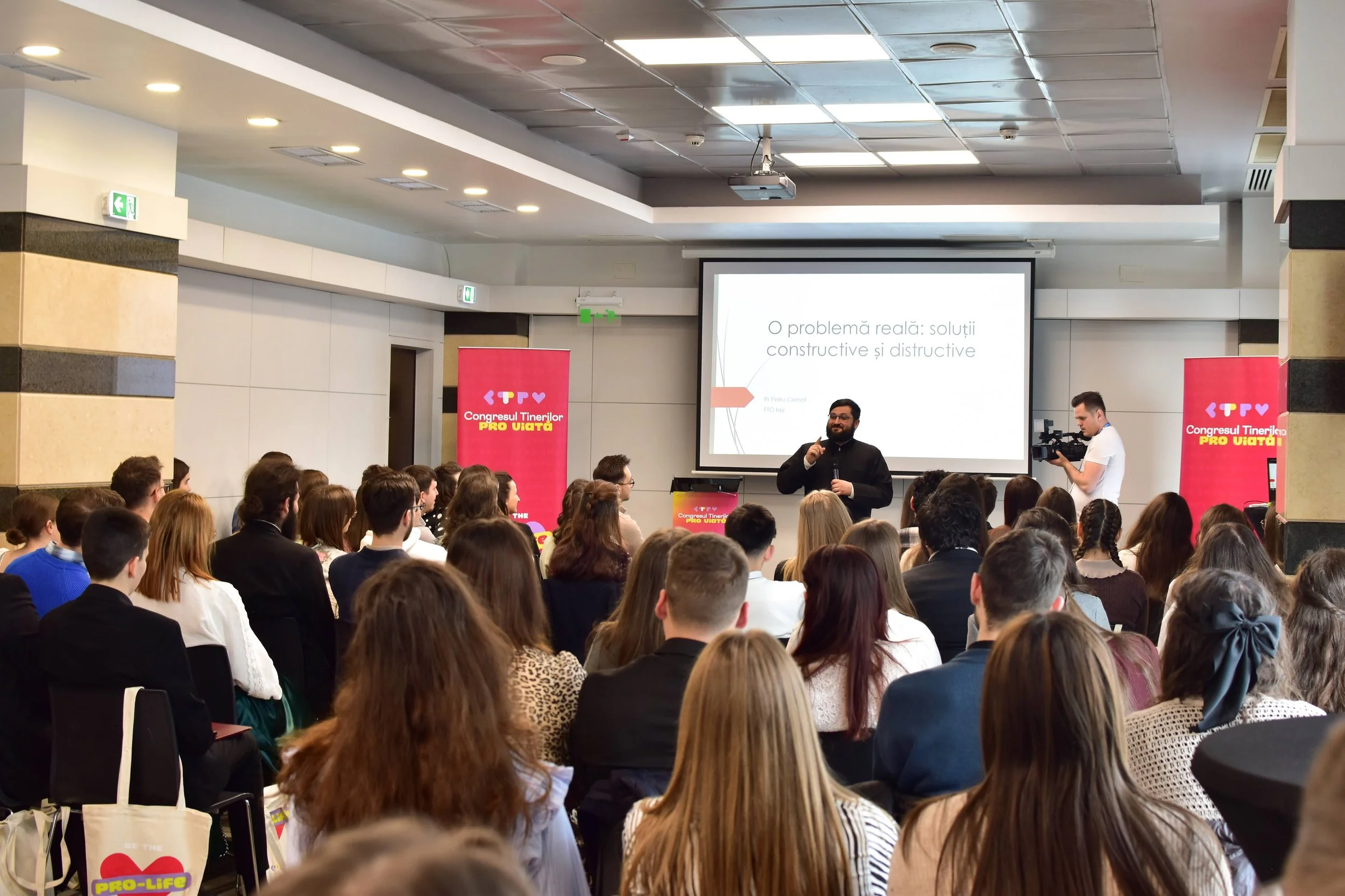
Fr. Petru Cernat talked about a "paradigm shift” that paved the way for broad societal acceptance of abortion. Fr. Cernat called it the “contraceptive culture" that delays marriage and family life, but at the same time promotes the beginning of sexual life apart from the context of marriage and without responsibility. Fr. Cernat emphasized that this culture did not come about accidentally and traced it back to a broader ideological system that embraces hedonism, the idea that sets pleasure and enjoyment as the greatest good in life, as well as to Marxism, which limited the family unit to the potential productivity of each individual family member. Fr. Cernat said this mentality made it necessary for women to join the workforce, and the legalization of abortion was used as a means for this end. Few people know that the Soviet Union was the first country to legalize abortion on request. It was in 1957, under Decree 463, that Romania made abortion available on demand following the Soviet model.
Fr. Cernat ended his talk by emphasizing the essential role of husbands in supporting their wives when challenges arise,
"So the role of the man in such a situation is to be a source of energy, a source of life for the woman in this crisis. We are called to understand this as a pro-life generation."
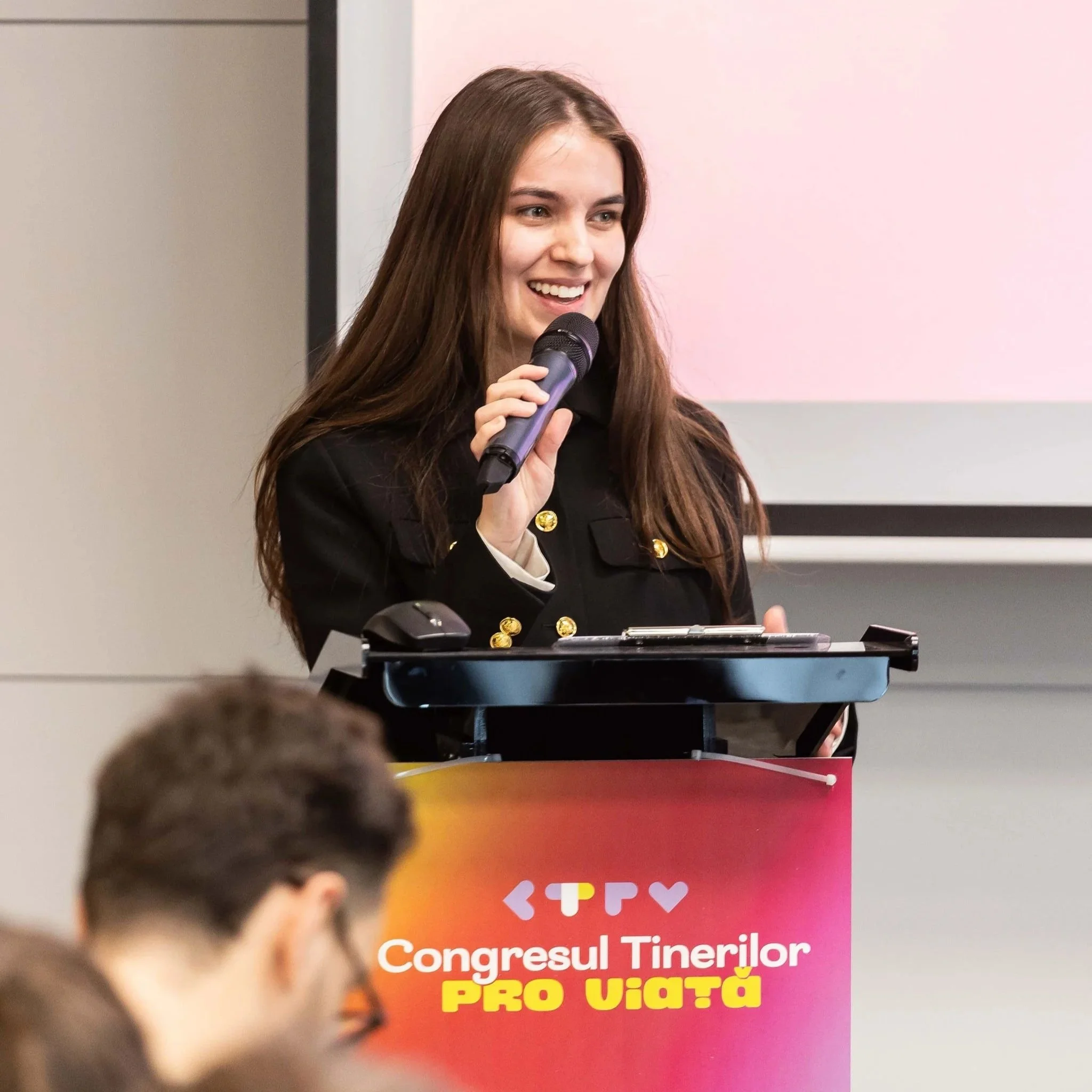
I was grateful for the opportunity to join these inspiring young leaders and deliver some remarks about our work at the United Nations. I told them about the regrettable push at the UN to promote “abortion access” as a human right, and the many well-funded UN initiatives carried out in the developing world seeking to change the hearts and minds of young people on the topic of abortion.
I also talked about the “metamorphosis of language” and how seemingly inoffensive or positive-sounding phrases, such as “sexual and reproductive health” (SRH) or “bodily autonomy," are used to shield controversial and harmful procedures, such as the killing of the unborn, and lead many young people to join advocacy programs without realizing the extent to which they center around abortion.
Lastly, I emphasized the importance of dialogue and speaking to as many people as possible about our pro-life convictions, especially in spaces that promote abortion. You never know where you can plant a seed that will change a life.
A Reflection from Teodora Paul
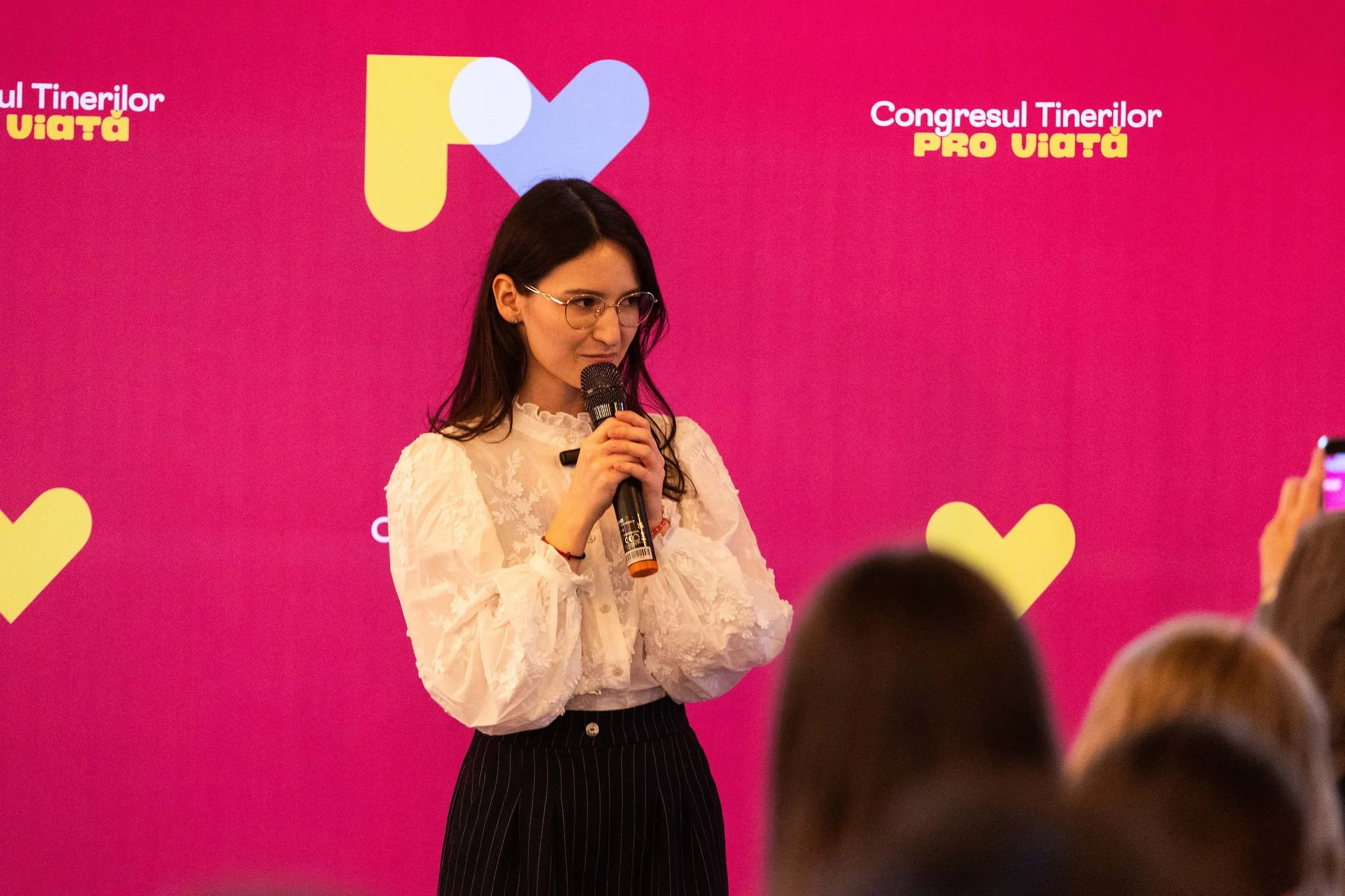
Teodora Paul, the President of Students for Life Bucharest and organizer of the congress, told IYc that the purpose of this event was to “reunite youth from all parts of the country and even beyond” and that “it sought to be a transformative experience for youth participants, an experience that would motivate them, equip them with the necessary skills, and offer them a community that can support them when they return home, and where they can build pro-life projects.”
The youth who are here at the Congress are the youth who sought to understand what it means to be pro-life beyond mere theory [...] who seek to be pro-life by supporting pregnant women, supporting unborn children, helping so that all people can rejoice in the gift of life by offering them, above all else, the right to be born.
This congress is not only for “pro-life youth” but for the youth who would have been pro-life. Half of Gen Z in Romania did not get the chance to be born, and when you realize this, you feel a much deeper calling to do something about it so that no other child becomes a mere statistic.
- Teodora Paul