

Voices for the Unborn: Youth Advocacy at 2026 UN Women’s Forum
Mar 26
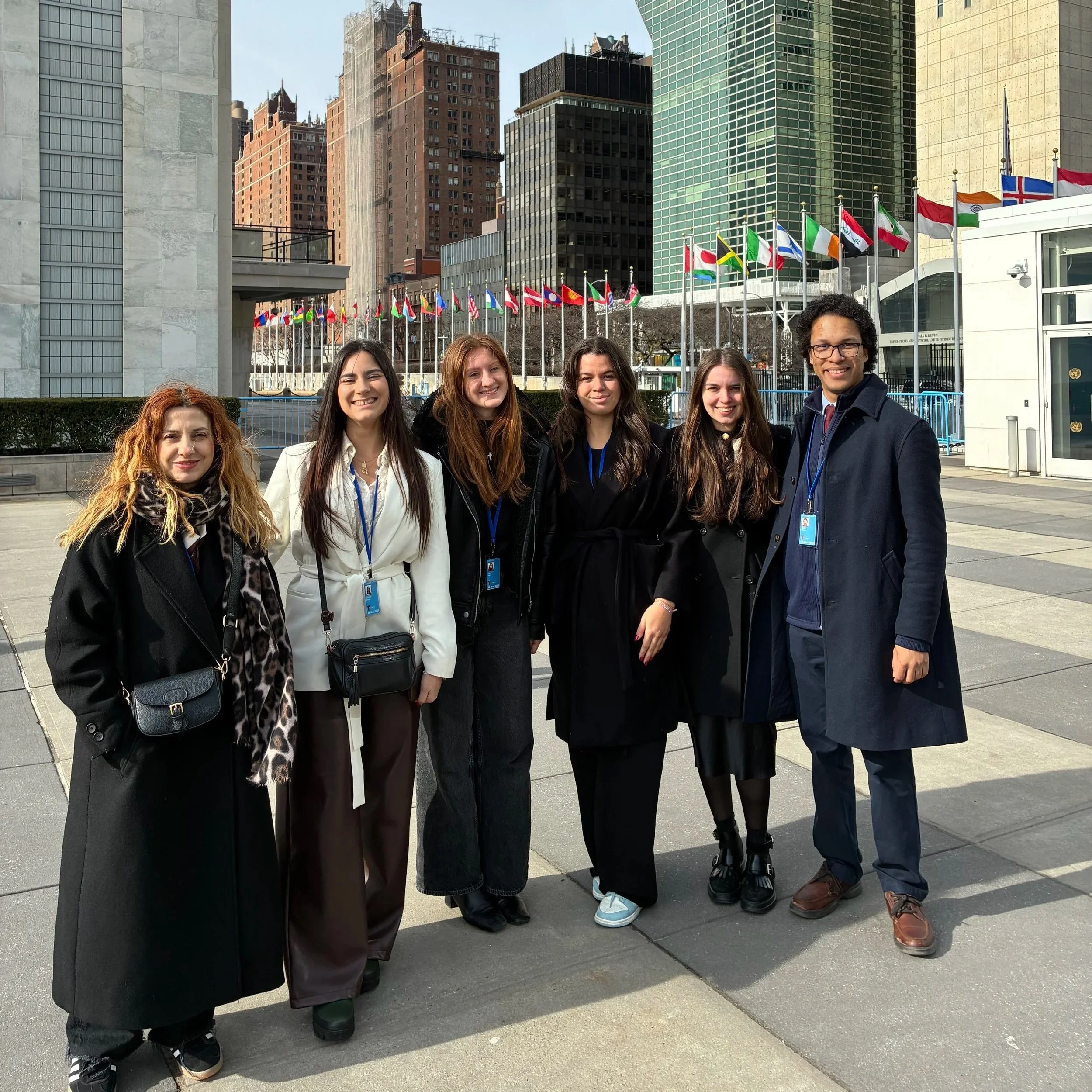
Our IYc team joined the UN Commission on the Status of Women, advocating for a vision of justice that respects the fundamental right to life for all women and girls, no matter the stage of life, inside and outside the womb. We hosted an event featuring pro-life advocates from Europe, Latin America, and the US, engaged with panelists at pro-abortion events, and talked to high-level UN officials, including the head of UNFPA.
We are witnessing a profound generational shift when it comes to the abortion debate. Through the resurgence of faith, grassroots organizing on college campuses, and social media advocacy, young people are coming to recognize the intrinsic value of human life from conception. To the surprise of the organizers of a 2025 debate between Lila Rose and Frances Kissling held at Yale University, the pro-life position won the audience with a vote of 60–31, a win of nearly 2-1 margin. This goes to show that when seriously considered, the pro-life stance proves to be intellectually sound and in line with scientific truth and a holistic vision of human dignity.
The UN is out of step with this reality. It continues to misleadingly portray young people as a monolithic group in support of abortion.
The Future is Pro-Life: Gen Z Takes the Lead
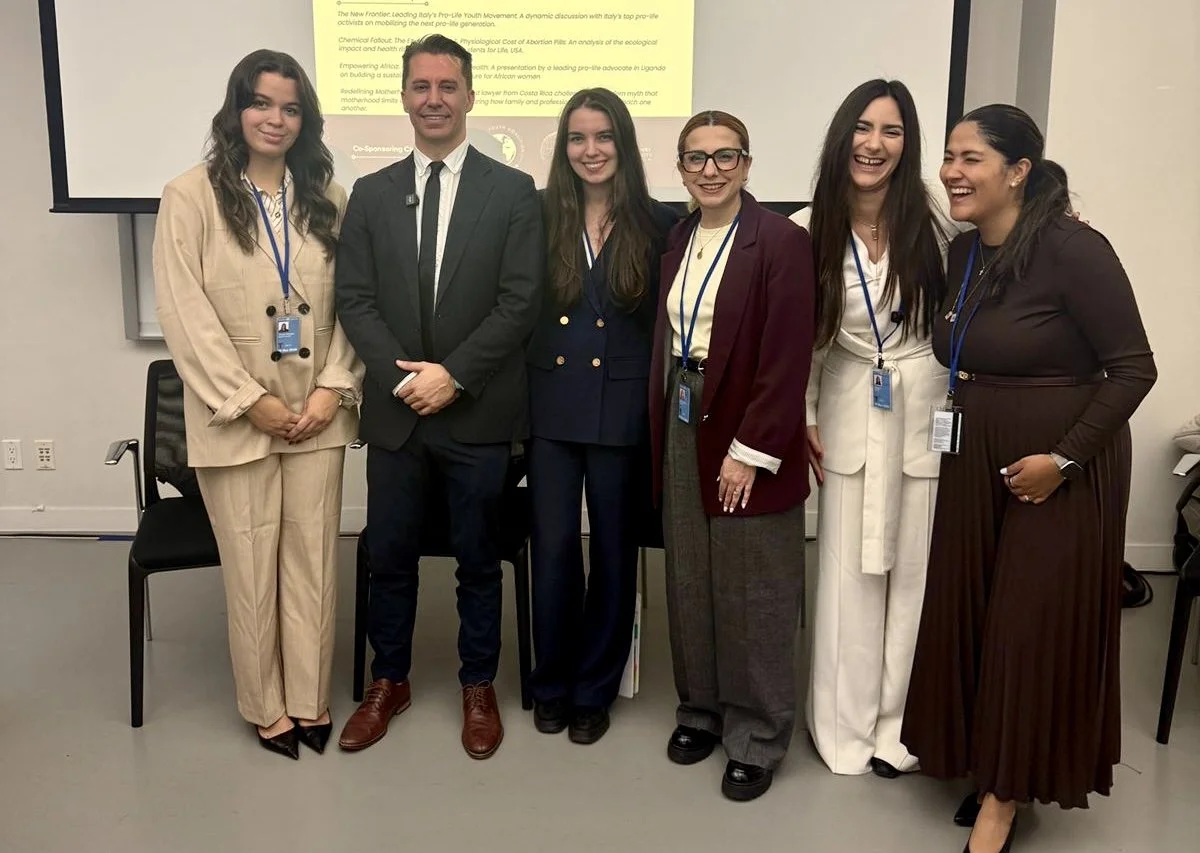
To prove the contrary, we held an event during CSW featuring several remarkable young pro-life leaders discussing the impact of pro-life advocacy on Gen Z.
Olimpia Galiberti, a lawyer and leading pro-life advocate from Italy, encouraged young people to be bold when speaking their mind on abortion, starting with their inner circle. She talked about how she used social media to meet and connect with other pro-life leaders in Italy and France and build a movement across Europe. Olimpia has spoken internationally, including at the March for Life in Paris, Bucharest, and Rome.
Matthew Gozzi from Students for Life of America talked about his experience visiting college campuses and meeting students one-on-one. He said that even at progressive schools, there are more pro-life students than people expect, but many are just quiet about it and waiting for encouragement to speak up. Matthew said young pro-lifers are not trying to go against the culture; they are being “regular.”
“The students on campus are so desperate for truth. They are desperate for something ancient, eternal, ” Matthew continued.
Stefania Spezzacatena, founder of Stronger by Purex, presented one of the pitfalls of digital AI and hypersexualization. Stefania unpacked how the ethos of the pro-abortion movement and third-wave feminism more broadly often normalize the hypersexualization of women and youth, and discussed the far-reaching cultural implications of this shift, especially in the age of AI. She mentioned the “loss of empathy and the normalization of harm” and its negative implications for couples and families.
Camila Caracamo, a mother and lawyer from Costa Rica, spoke about how family life and a fulfilling career can go hand in hand.
“Feminism taught women to fear dependence. Motherhood taught me that dependence is human. We all begin life completely dependent. We flourish in relationships. We find meaning not in autonomy, but in communion [ …] A system that forces mothers to separate from their infants to pursue education is not neutral. It reflects a worldview — one that treats the family as secondary.”
Advocating for Human Dignity at the UN
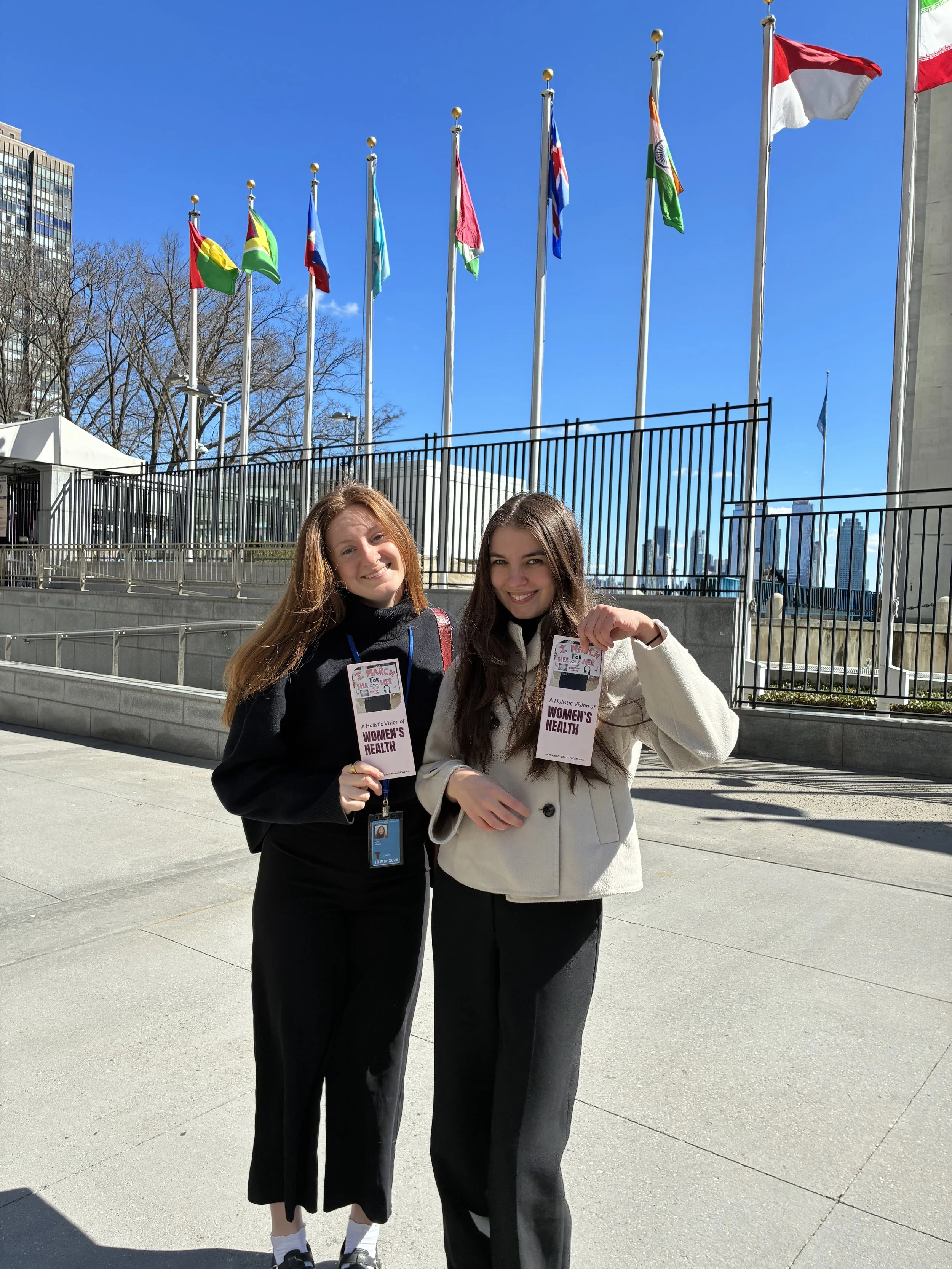
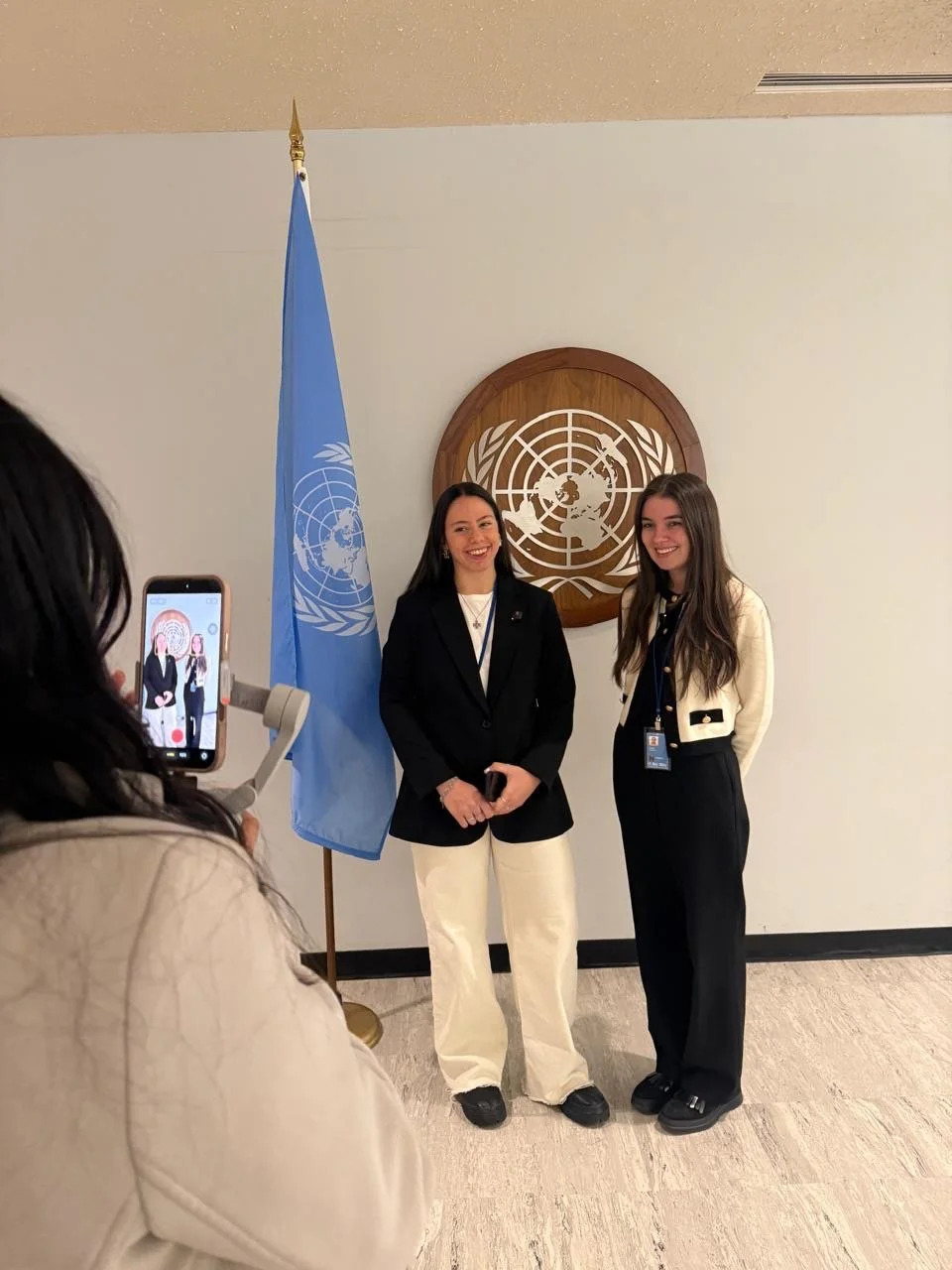
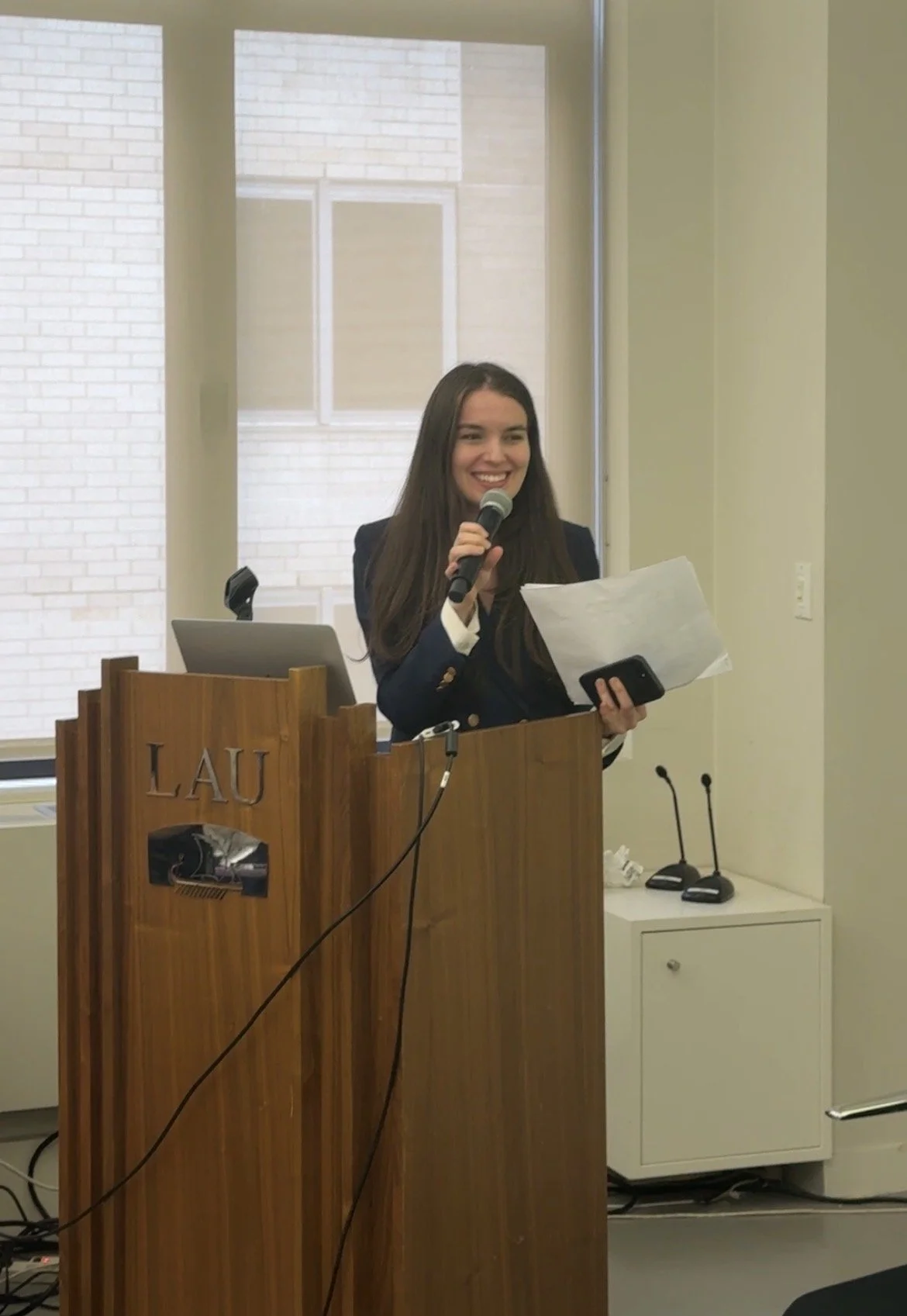
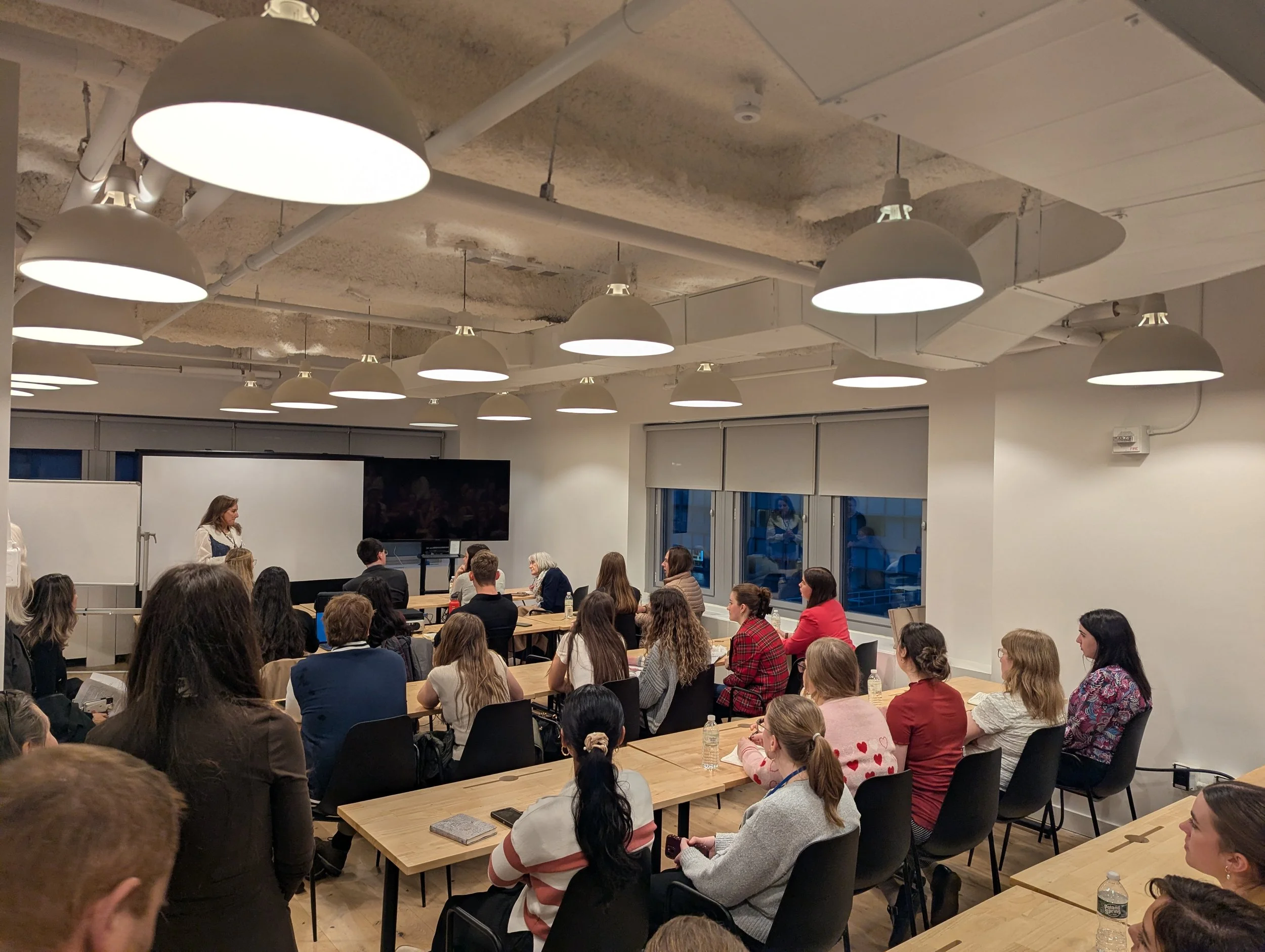
We joined pro-abortion events and engaged with panelists during Q&A sessions and 1-1 conversations to share our perspective on human dignity, one that views both the mom and the baby in the womb as rights-holders.
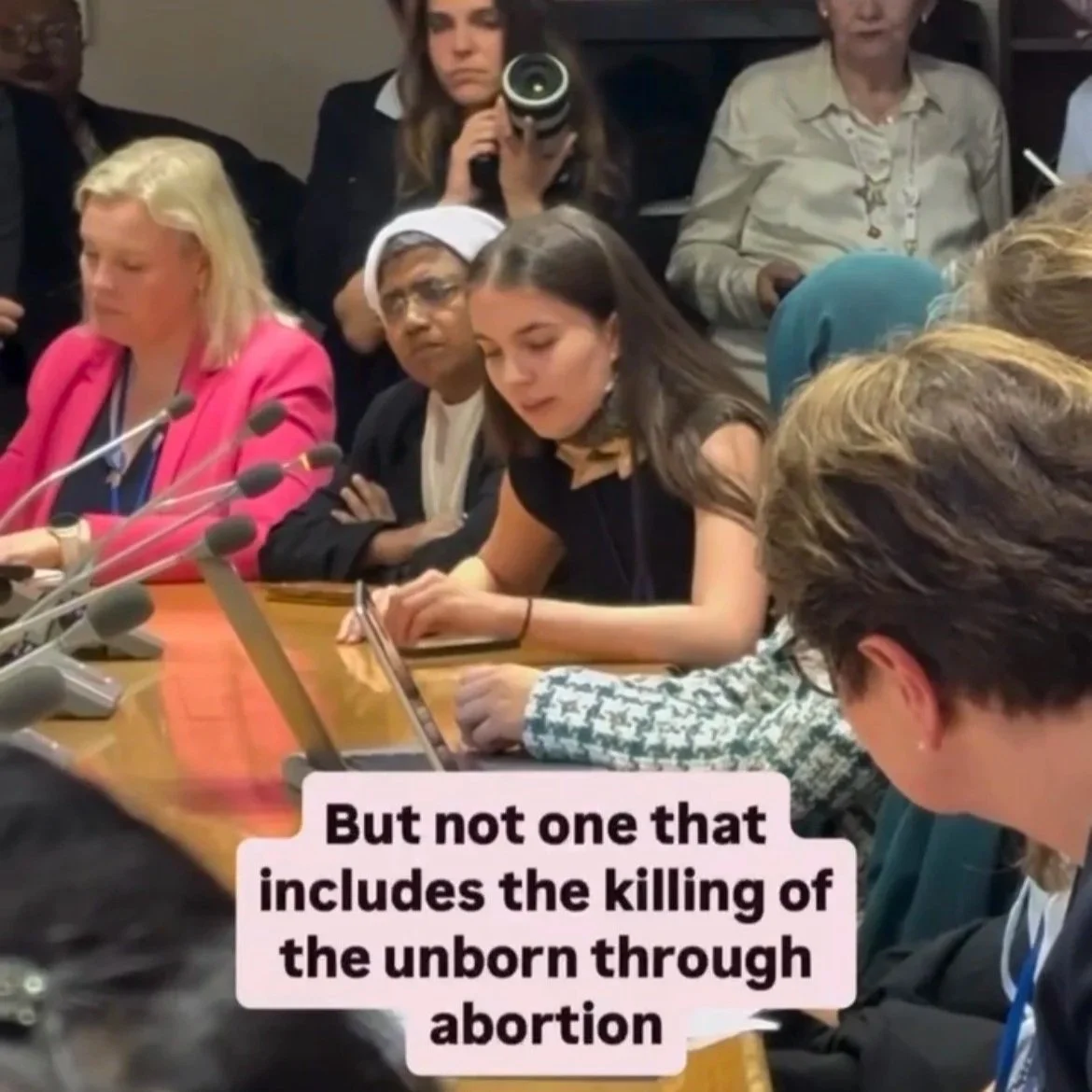
At an event hosted by Finland and UNFPA, I asked the panelists why UN agencies do not focus on the real, basic health needs of women and girls—needs that almost everyone could support.
So much more could be done if abortion were not included in their services. Click here to watch the full intervention.
At an Oxfam event, I asked panelists who supported abortion if they had thought about the value of life in the womb and why we cannot promote policies that protect both mothers and babies. Their answers were unclear. One panelist said bioethics discusses babies' viability at 12 weeks outside the womb, but that is a scientific point, not a bioethical one. I think she meant that some people believe a baby must be able to survive outside the womb to deserve protection. But that argument is weak. Even after birth, babies still depend on adults for care and would not survive alone. Other panelists said that a baby in the womb “cannot be considered a life” and that we need to focus on those “already living in the world.”
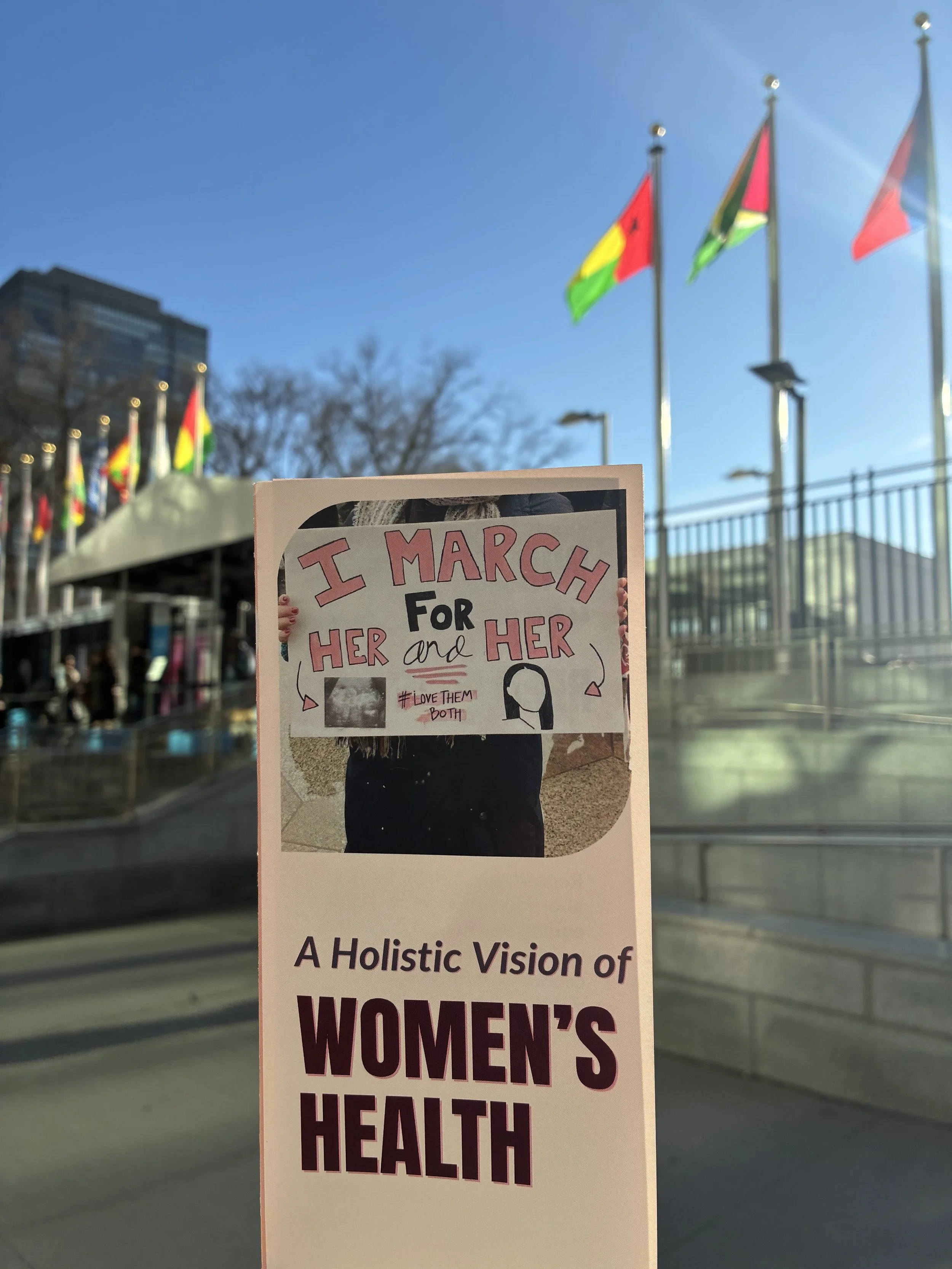
We encouraged our volunteers to talk with people around them about our work and explain why we oppose terms like “sexual and reproductive health,” and why we believe in a holistic view of health that protects both the baby in the womb and the mother.
Due to vague terms like “sexual and reproductive health and rights,” many young people join pro-abortion efforts without realizing how much these focus on abortion or thinking about what it really means. Culture, authority figures, and groups like UN agencies teach them to repeat slogans like “my body my choice” or “bodily autonomy,” but do not help them answer important questions: Is the baby in the womb a human life? Is that life worth protecting?
Impressions from Youth
Our volunteers had mixed feelings about the UN. They were glad to see other pro-lifers at events, but many felt discouraged by how much influence UN agencies and powerful countries have in shaping norms and promoting abortion, gender fluidity, sexuality education, and third-wave feminism.
“The pro-choice hosts would often try their best to limit debate as much as possible, by conveniently running out of time or by simply not answering questions from pro-lifers. Additionally, the secular progressives would often be passive-aggressive and call pro-lifers anti-rights activists. If the pro-choicers felt really threatened, they would even demand that the pro-lifers stop talking because they are attacking a safe space. It is truly sad to see that the U.N., which was supposed to be the center of international dialogue, has become a place where the opposition cannot respectfully voice its opinion.”
- Sebastian Orth
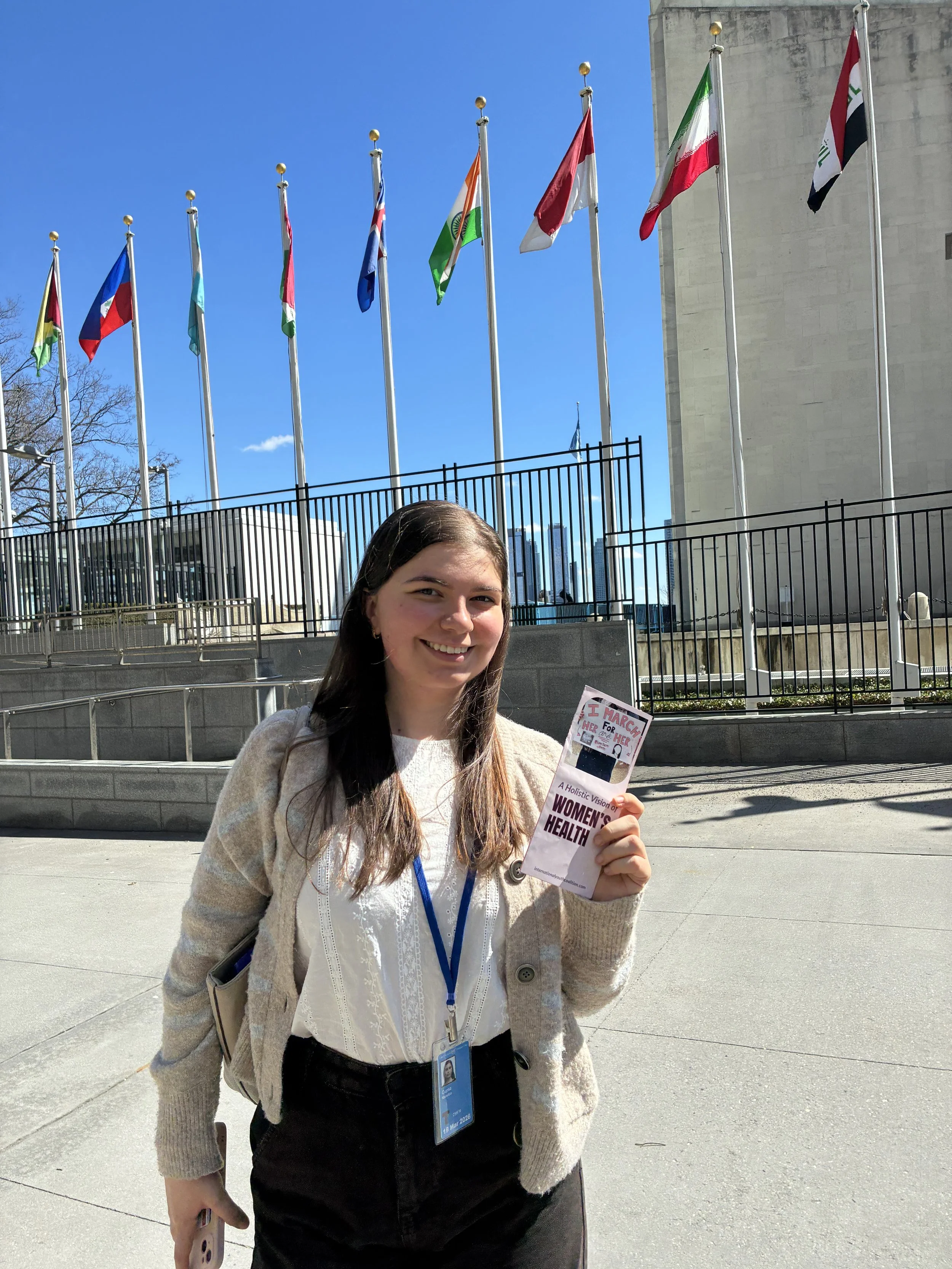
Madalina shared with us that “Attending CSW for the first time was an eye-opening experience. I became more aware of how much is happening at the international level that, while publicly documented, is often veiled behind a language of progress and necessity, when in reality it undermines the very foundations of human dignity and family.”
“I was deeply honored to meet and serve alongside the IYc and C-Fam team. The dedication and heart of everyone involved irreversibly moved me, and I left feeling inspired and called to bring this awareness into my own community.”
- Madalina, IYc volunteer
IYc x Christian Council International Youth
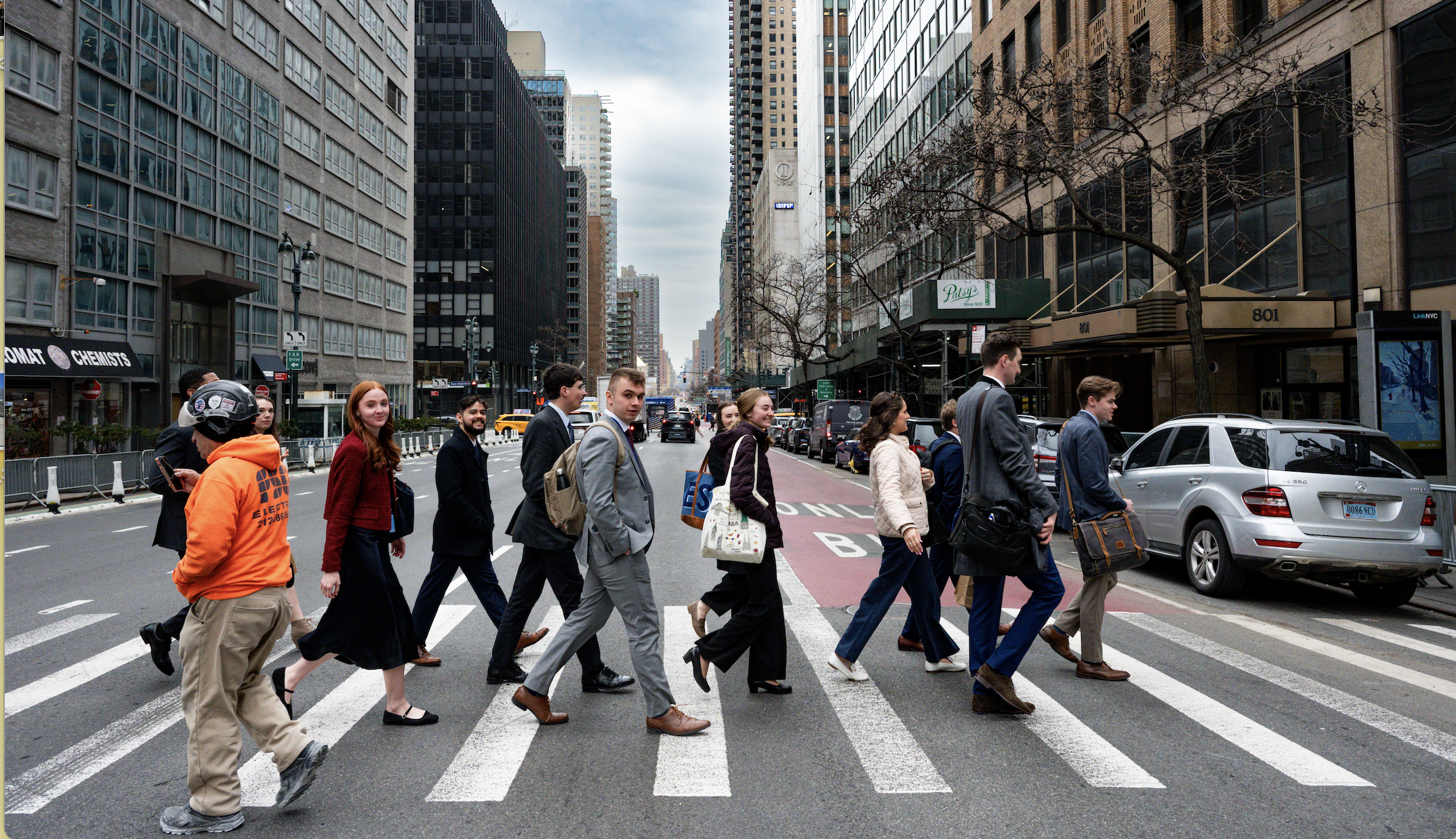
CCI Fellows at CSW70
We also enjoyed meeting with the Christian Council International Youth and joining some CSW side and parallel events together. The more brave pro-lifers at the UN, the better! Below are some reflections from a few of the fellows:
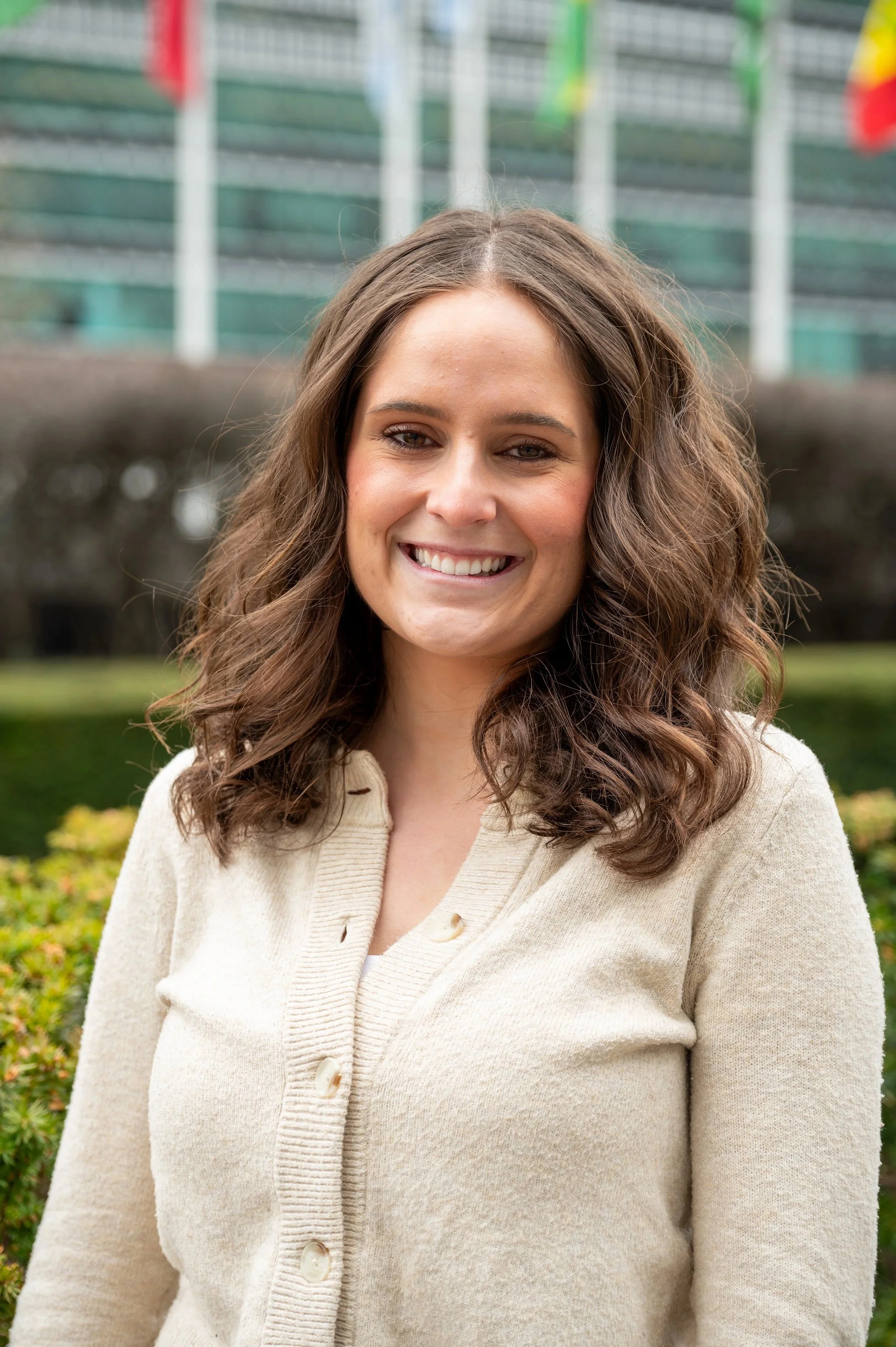
Rebecca Phillips, a Junior at Patrick Henry College, said she was surprised to see so many pro-lifers at the UN and how this goes to show that “we are more united under Christ than under any other political banner.”
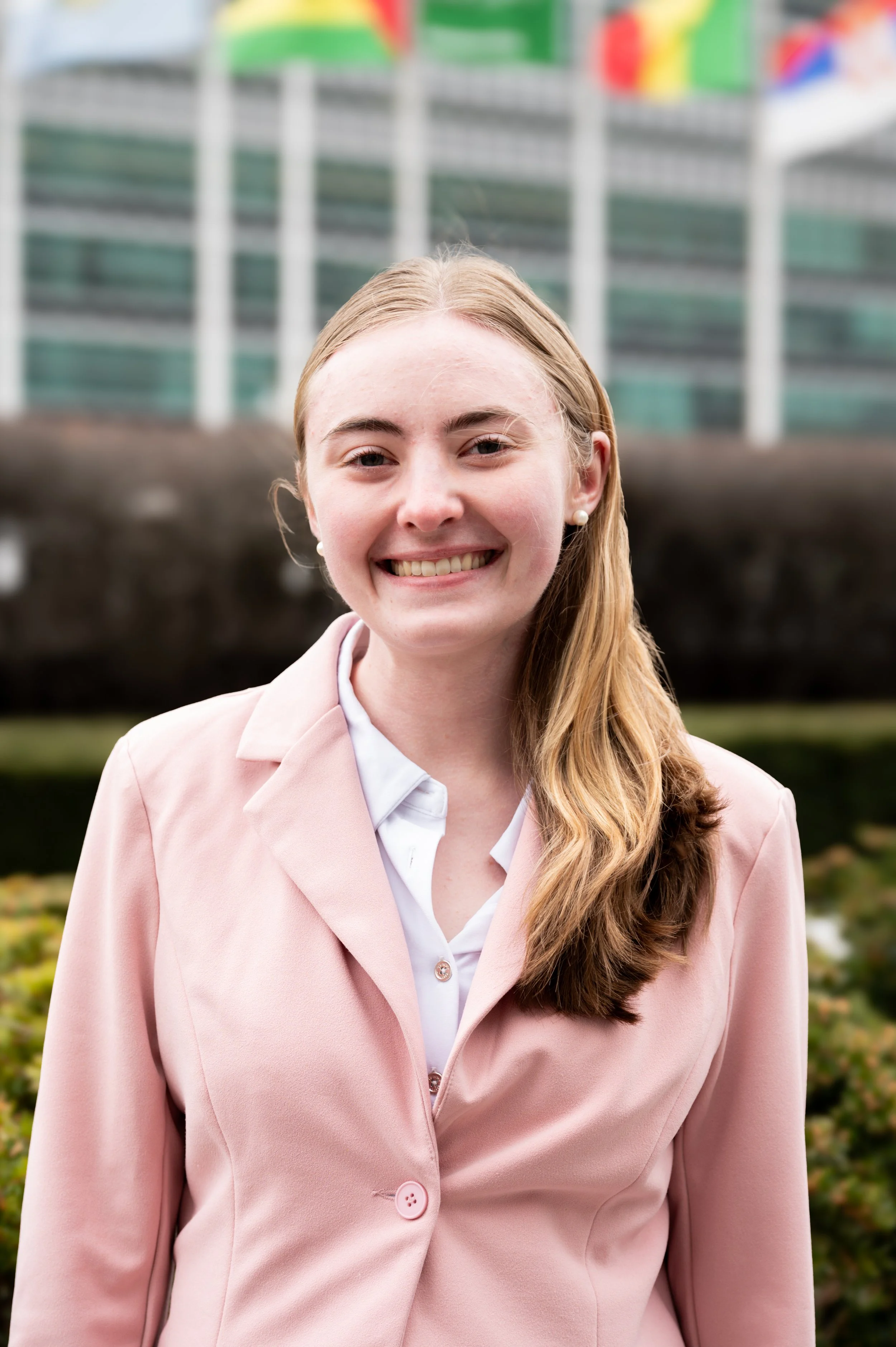
Magdalena Banweg, a student at Hillsdale College, talked about how much of the “normative work of the UN differs from Christian, conservative values” and mentioned the prevalence of “unclear language” that, when dissected, reveals “ ideas that we [as Christians] do not believe in.”
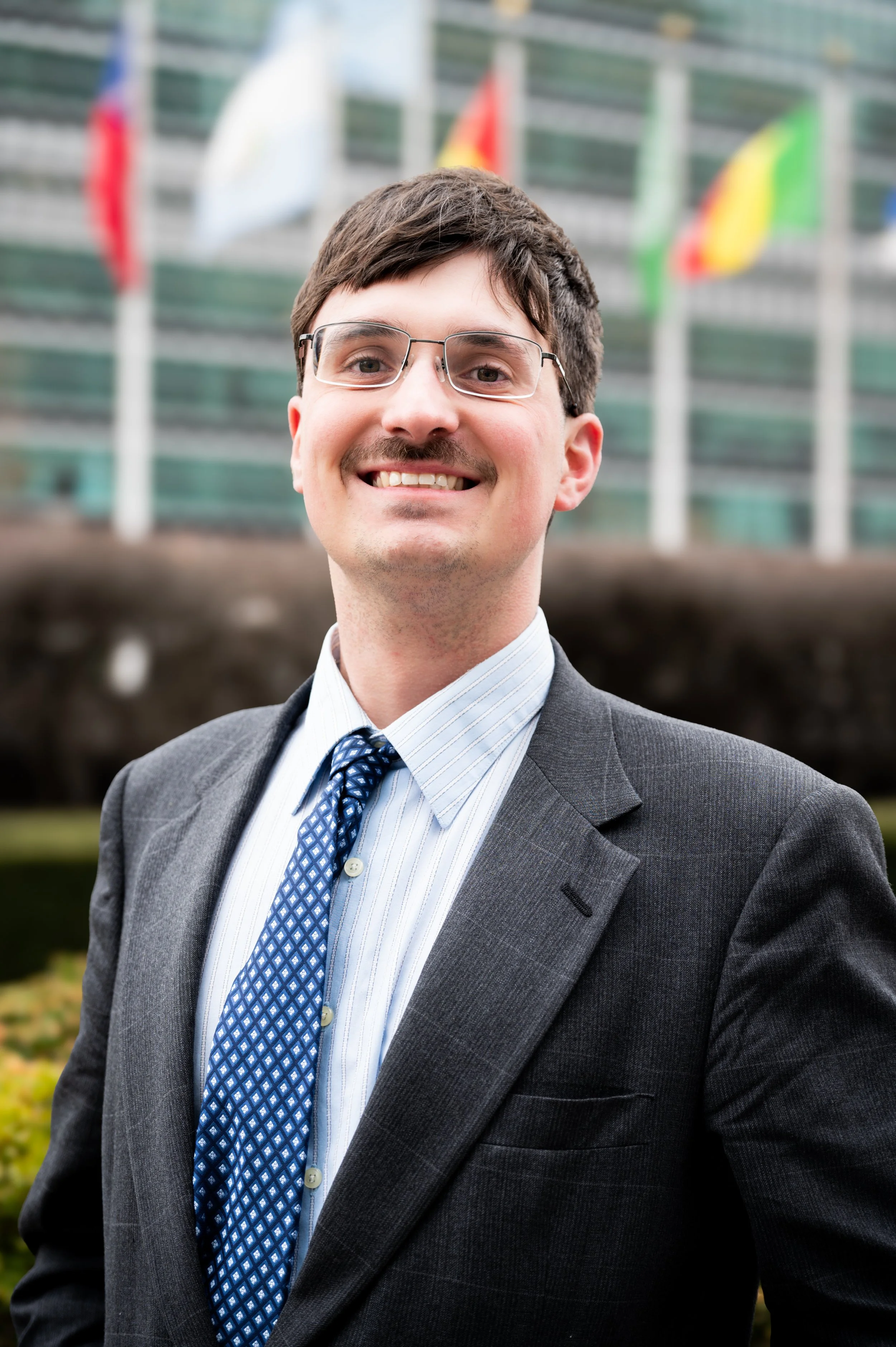
Sebastien Ostertag said that the UN is “ really where the world comes together [...] the UN is a mission field, this is where you can meet a lot of people and can talk to a lot of people about Christ.”
“Although in the US we may not totally understand the importance of the UN, in countries that are developing, in countries that are a lot smaller, the UN has a lot of power and they can exert a lot of pressure, and so it is important as Christians to stand up against the push from the UN, be it on population control, abortion, or sexuality education or gender ideology.”
- Sebastien Ostertag
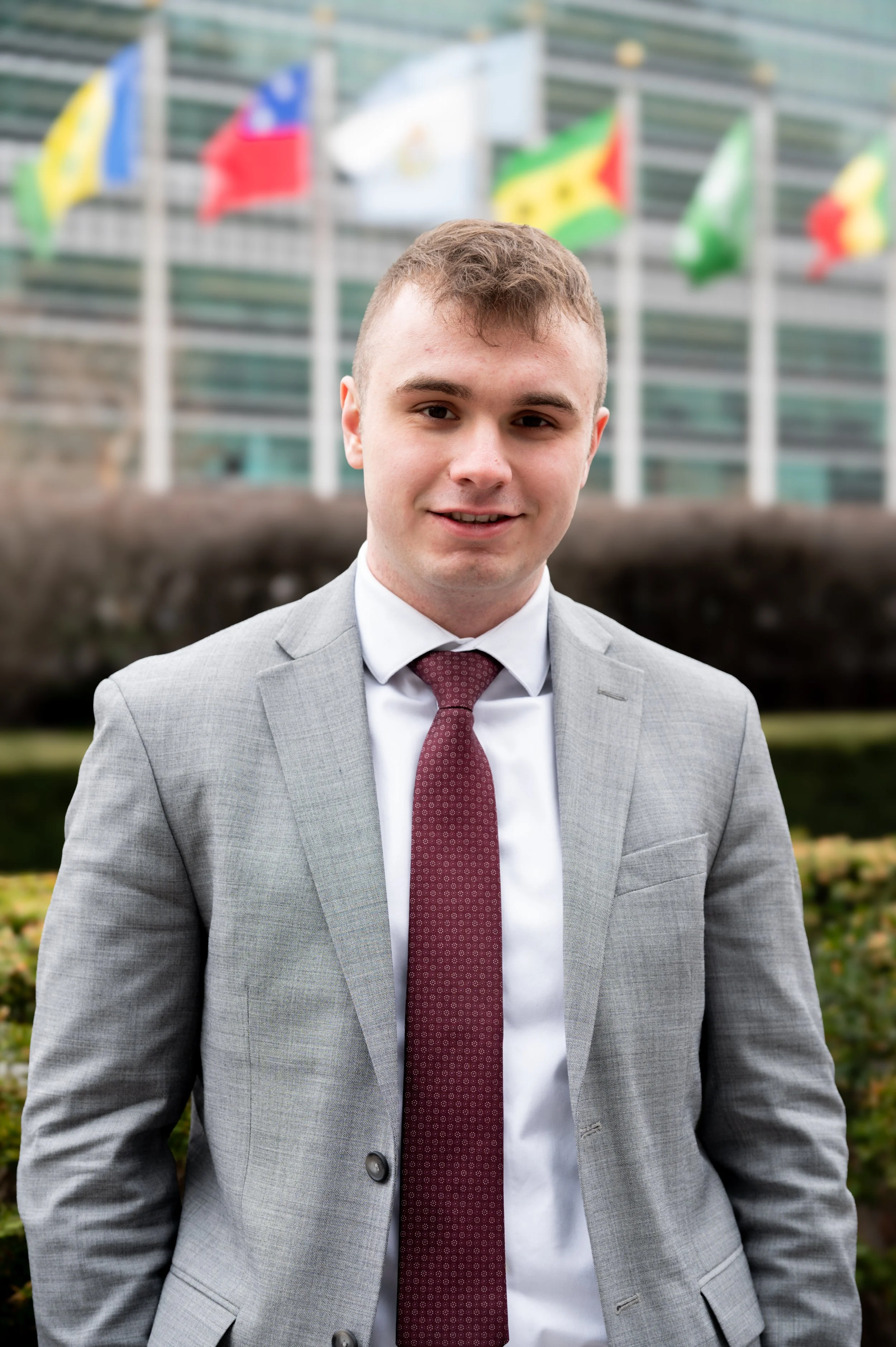
“You see the leftist agenda [at the UN]. It’s right at the forefront. They tell you what they’re doing, they’re even telling you what we’re doing and what they’re gonna do to counter that […] It’s not that they’re useless; they’re actually harmful.”
- John Bilkes
